
Hand File Range by Material and Workpiece
Begin with the workpiece material and the actual contact shape. Metalworking files, wood rasps, saw files and precision tools serve different jobs, even at the same length. This overview points you to the relevant category and the detailed guide with the model, dimension and quote inputs.
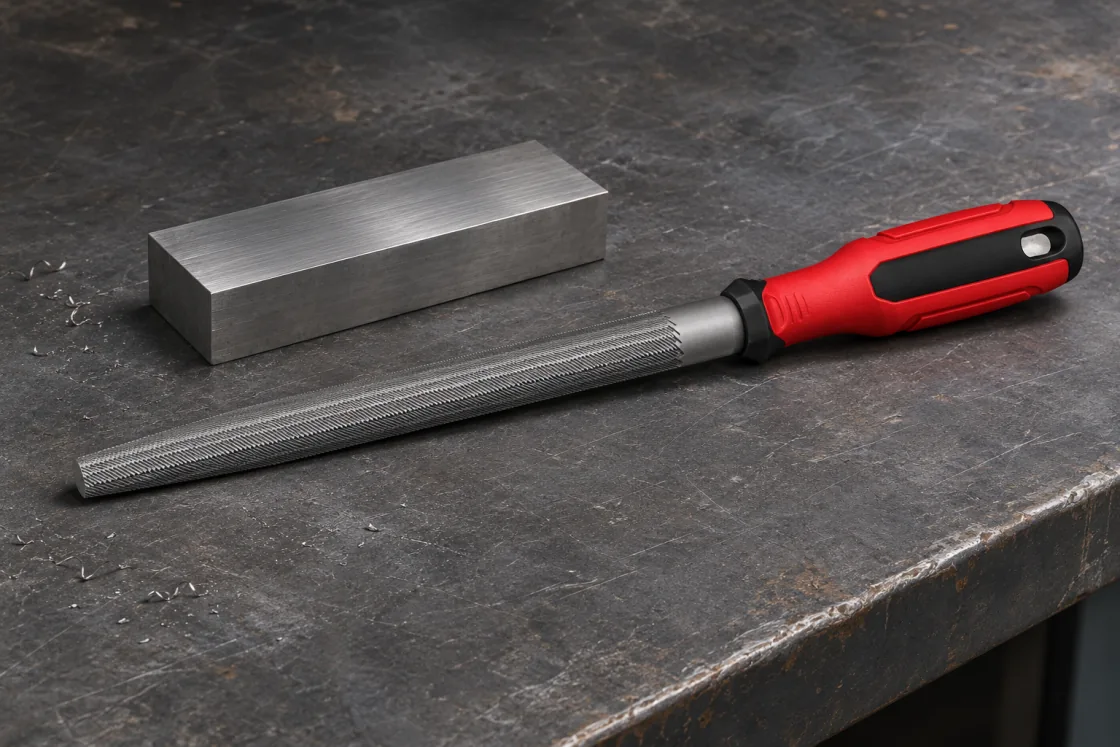
A First Selection across the Range
Start with the job, then open the model page for the actual cut, working section and size. Keep material and geometry separate in your order notes.
| Workpiece or task | Catalogue starting point | Detailed buying guide |
|---|---|---|
| Metal edges, bores and corners | Tapered flat, round or half-round | Choose the file profile and actual section |
| Wood shaping and fitting | Flat wood rasp, coarse or medium | Compare dedicated wood profiles and a 4-in-1 |
| Hand saw gullets or chains | Regular taper or round chain file | Hand saw face widths and chain file diameter |
| Small details and instruments | Needle files or flat fret leveling file | Precision sets and fret tools |
| Accessories | Handles, brush and holder | Select by the interface or file surface |
Wood Profiles Follow the Geometric Feature
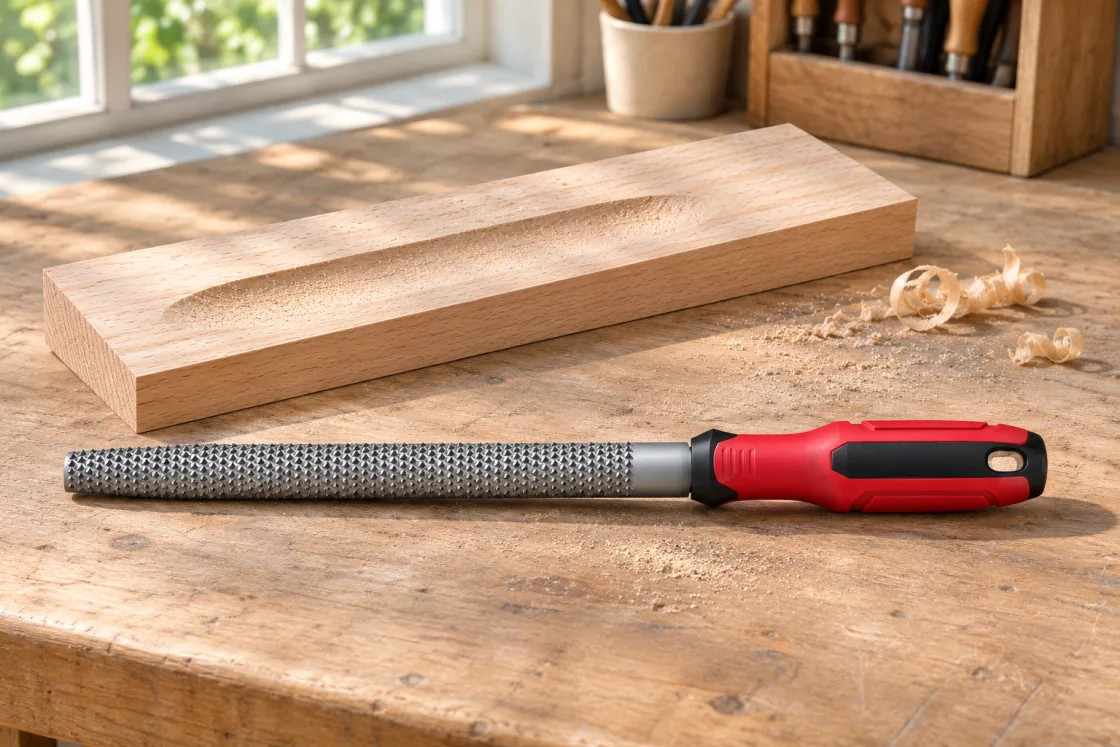
Our 8-inch half-round wood rasp lists a 19.2 mm width and 5.0 mm thickness. The round wood rasp lists an 8-inch 7 mm diameter. Compare the point of contact on a representative wood part, and use the actual section if a hole or recess is narrow.
Cut Choice for the Material
Two files can have similar external dimensions and different tooth configurations. Compare the catalogue cut with the material and the surface you need to leave. The file reference manual shows typical single-cut and double-cut uses.
- Metal roughing and finish
- Separate the double-cut and single-cut stages
- Fine wood fit
- Separate fitted joint and final edge
Sharpening Files Need a Different Measurement
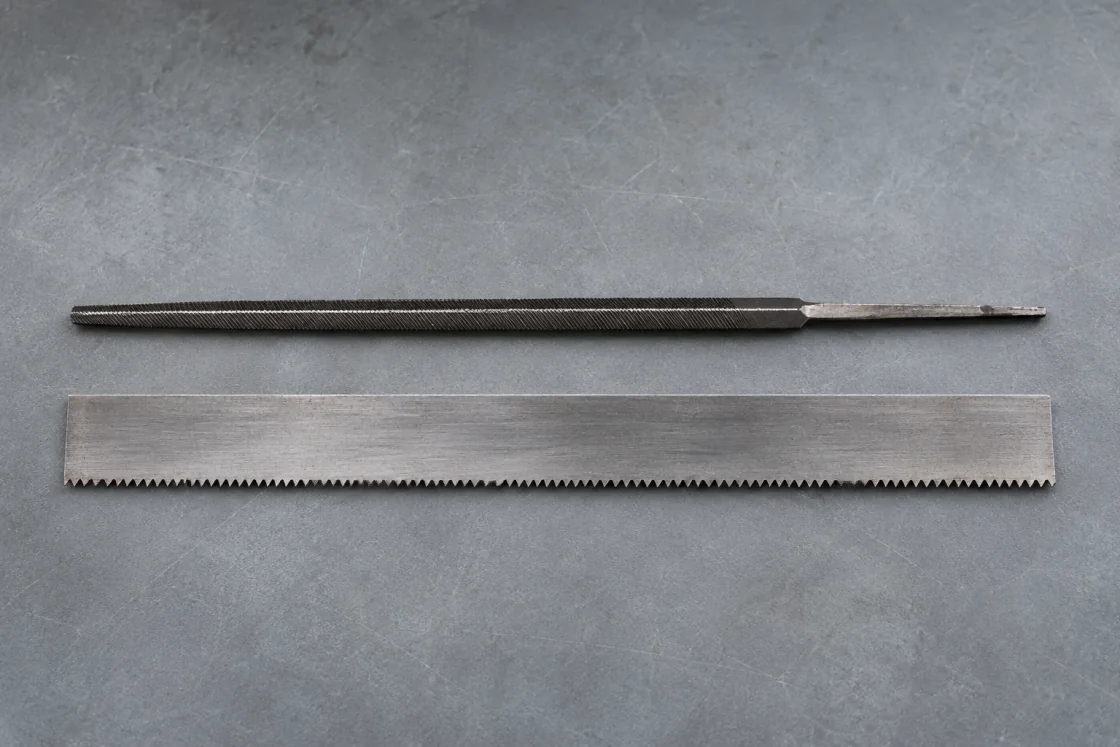
At the same nominal 6-inch length, regular and slim taper saw files list 10.8 mm and 8.5 mm width respectively. A chainsaw file uses a round diameter specified for the chain and a wood-drill file uses the actual access in the part. Record the tool model and relevant dimension when requesting a quote.
Fit the Profile at the Actual Contact Point
For a tapered or rounded tool, the usable width or diameter depends on where it meets the part. Use a measured sketch so the supplier can identify the exact section and whether an adjacent face needs protection.
- Geometry
- Opening, angle, shape and usable access
- Working face
- Size at contact, tooth pattern and desired finish
- Order proof
- Exact selected model, sample and measurement points
Precision and Small-Feature Categories
Use a needle-file set with a known profile mix. For glass or ceramics, compare the diamond coating and grit on the actual workpiece. Instrument tools need their own fret or slot measurements.
A Specialist Tool and Its Order Reference
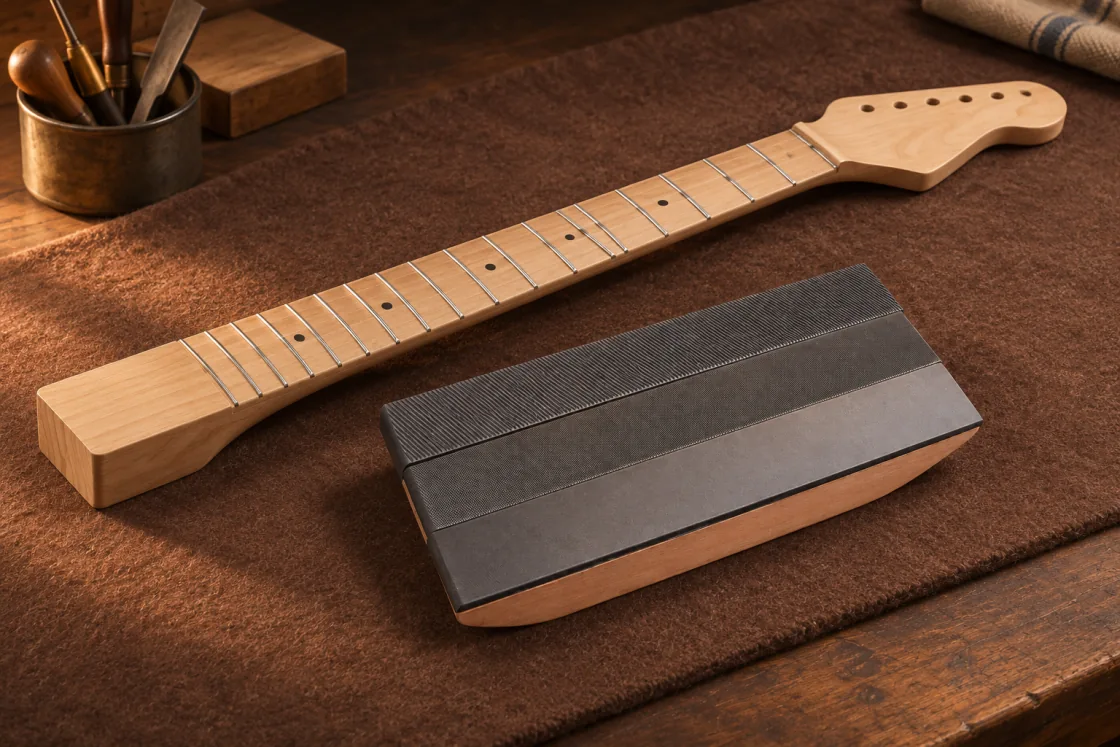
Our fret leveling file has a flat working profile. Crown and bevel files have different sections and work stages. Give us the shape or section as well as the instrument application if you order several tools together.
Replacement Parts and Cleaning
The file profile starts the tool order. Handles, holders and brushes require a different dimension or surface check, so use their dedicated order guides.
Send the Workpiece and Model Details
Include a product link, intended material, contact geometry and quantity. Add the surface requirement or drawing when that determines acceptance.