
File Cleaning Brushes by Bristle and File Surface
Our file cleaning brush lists steel wire, brass wire and nylon for removing chips or wood dust from working teeth. Choose a bristle on the actual file surface you need to protect. A brush that clears visible residue from one file may not reach the tooth spacing or suit the coating on another.
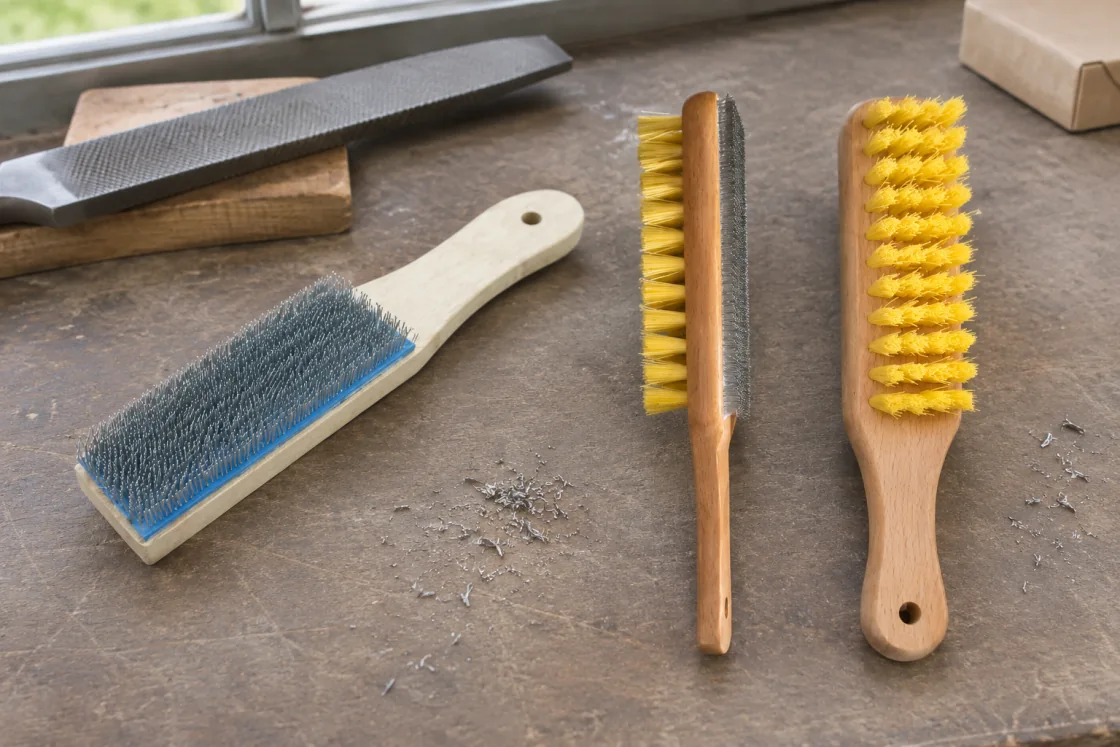
Brush Materials and a Controlled Sample Comparison
Use the declared brush material as a buying field. Test a candidate and an untreated or previously used reference area under the same conditions.
| Bristle selection | Typical comparison scenario | Acceptance check |
|---|---|---|
| Steel wire | A robust steel file with trapped machining particles, after compatibility is checked | Clearance in the tooth spaces and changes to the working surface |
| Brass wire | A candidate for comparing a softer wire contact | Observe residue removal and any visible marks or transfer |
| Nylon | Loose wood dust or a file with a sensitive surface that needs a gentle trial | Reach among the teeth and whether debris is actually removed |
Metal Chips Between File Teeth
Look at the tooth spacing, the material left behind and the finish of the file. A brush should reach the area you need to clear. Review the surface and the working teeth after testing a candidate material.
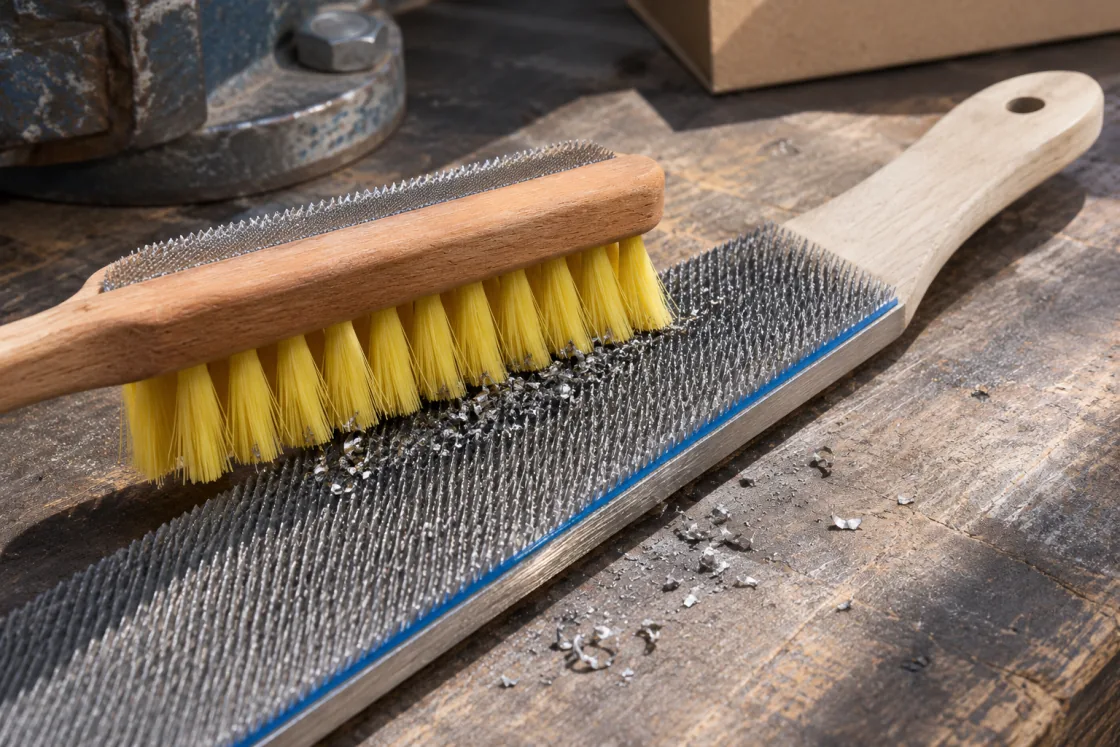
Cleaning a Metalworking File
Identify the metal, whether the particles are loose or lodged, and the teeth you want to protect. Our non-ferrous file guide provides the model context when your test includes aluminium, copper or brass work.
- Debris
- Loose chips or trapped material
- Surface
- Steel, coating or delicate region
- Contact
- Bristle access and practical method
- Result
- Observed clearance and tooth condition
Wood Dust and Fine Teeth
Fine wood dust and coarse filings can sit differently in the working area. Compare a sample brush against the teeth your shop uses and keep a separate record for fine or coated tools.
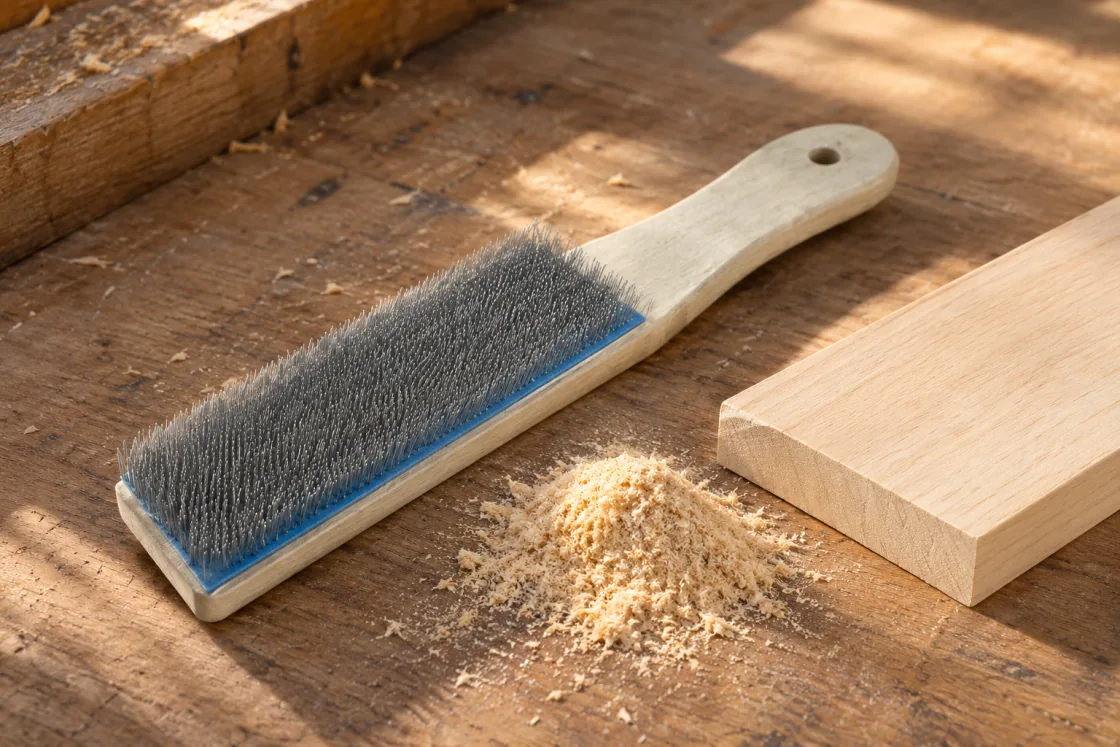
Check the Head Width, Reach and Surface
The brush listing identifies materials. Request bristle length and head dimensions on the selected model. Measure or request those on the selected product if you need clearance. For coated files, use a separate sample trial and the supplier’s care advice.
- Brush head
- Width, bristle length and working clearance
- Debris
- Loose dust or material trapped in tooth tracks
- File finish
- Original surface and what changes after a test
A Simple Debris and Surface Trial
Record a clear before-and-after photo on the same area and link it to both articles on the order sheet. The file reference manual discusses clearing material from file teeth. For a diamond-coated file, compare the actual coated finish separately before choosing a brush from this range.
- Before
- Record tool condition and debris
- After
- Check clearance and surface condition
- Approve
- Retain the accepted brush variant
A Brush for the Tool Station
Keep the brush model and bristle option with the tool station that will use it. A separate ordering note for coated tools makes it easier for staff to avoid using an untested match on a sensitive surface.
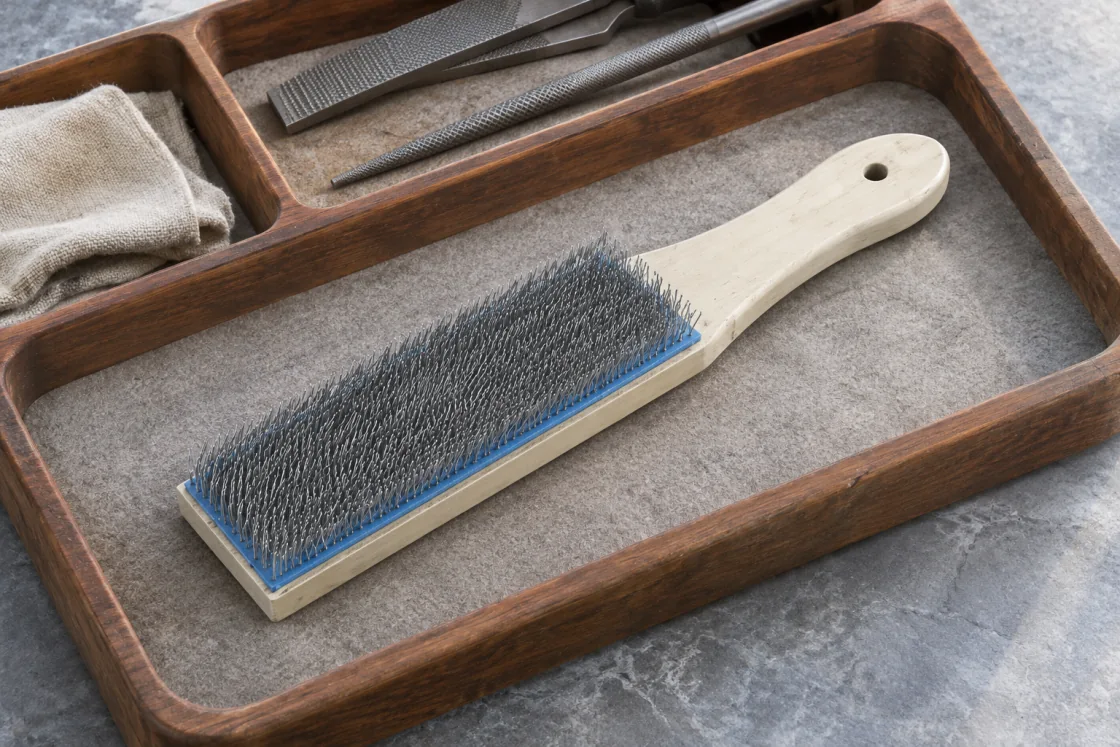
Care Choices Across Your File Range
Use the specified brush only where your sample confirms the surface and tooth condition. For diamond-coated tools, make a separate fit and surface check before ordering a care kit.
- Metal file
- metal file stage selection
- Wood rasp
- wood rasp profile options
- Coated file
- diamond needle file choices
A Brush Sample for Your Workshop
Send the file type, working surface, trapped material and bristle options you want to compare. We can use these details to discuss a sample and quote.