
Diamond Needle Files for Glass and Ceramic
Our diamond-coated needle files list 80, 120, 200, 300, 400 and 600 grit designations, an overall size range of 140–180 mm and 50–70 mm working lengths. Choose geometry first for glass or ceramic, then confirm the grit designation and applicable grading convention with the supplier on your quote.
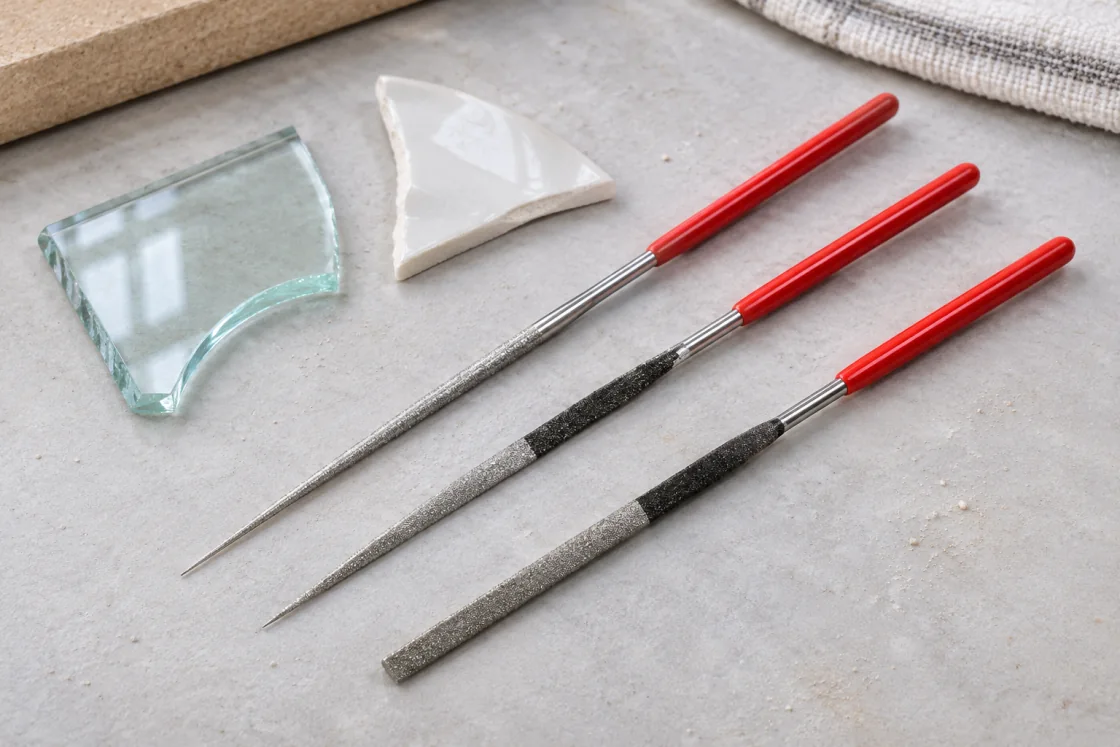
Profiles, Grit Designations and Working Length
These are published choices for the range. A particular set may have different contents or a different combination of profile and grit.
| Catalogue field | Listed data | Purchase check |
|---|---|---|
| Abrasive | Industrial diamond coating on high-carbon steel core | Confirm coating and grit designation for the exact profile |
| Grit | 80, 120, 200, 300, 400 and 600 | Use the same grit standard when evaluating any other supplier sample |
| Profile | Flat, half-round, round, square, triangle and knife | Choose a section that reaches the actual workpiece |
| Length | 140, 160 or 180 mm nominal, 50–70 mm working range | Confirm the active length and width on the received tool |
Profiles for Edges, Holes and Curves
The catalogue lists flat, half-round, round, square, triangular and knife forms. Match the tool footprint to the glass or ceramic feature. Ask for usable dimensions on the actual profile, as different shapes can reach the same part differently.
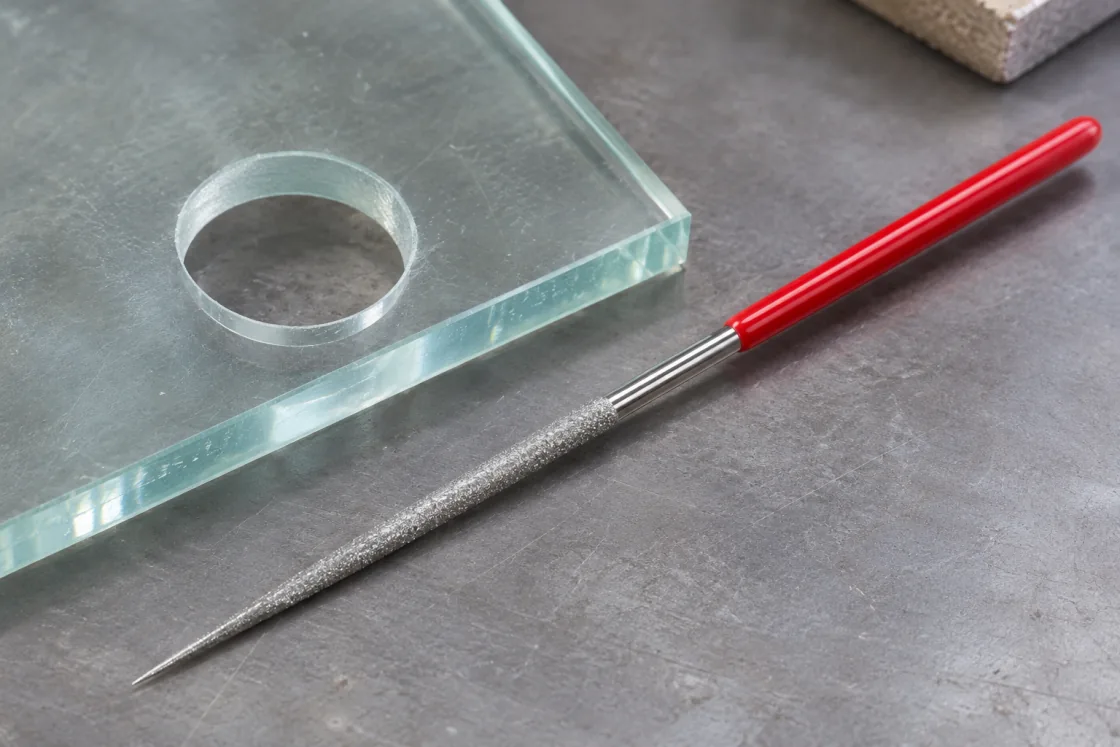
Working Length and Access
The listing gives a working length range of 50–70 mm and nominal lengths of 140, 160 and 180 mm. Request the exact length and contact width of the specific grit and profile you need before approving stock.
- Working length
- Catalogue range of 50–70 mm
- Section dimensions
- Measure the width or radius where it contacts
- Nominal length
- Confirm the quoted tool size
A Sample Surface for Finish Approval
Use a representative offcut and a comparable area for each grit. Look at visible marks and edge condition under the same light. Record the inspected material, the grit you used and the tool’s condition at the end of the trial.
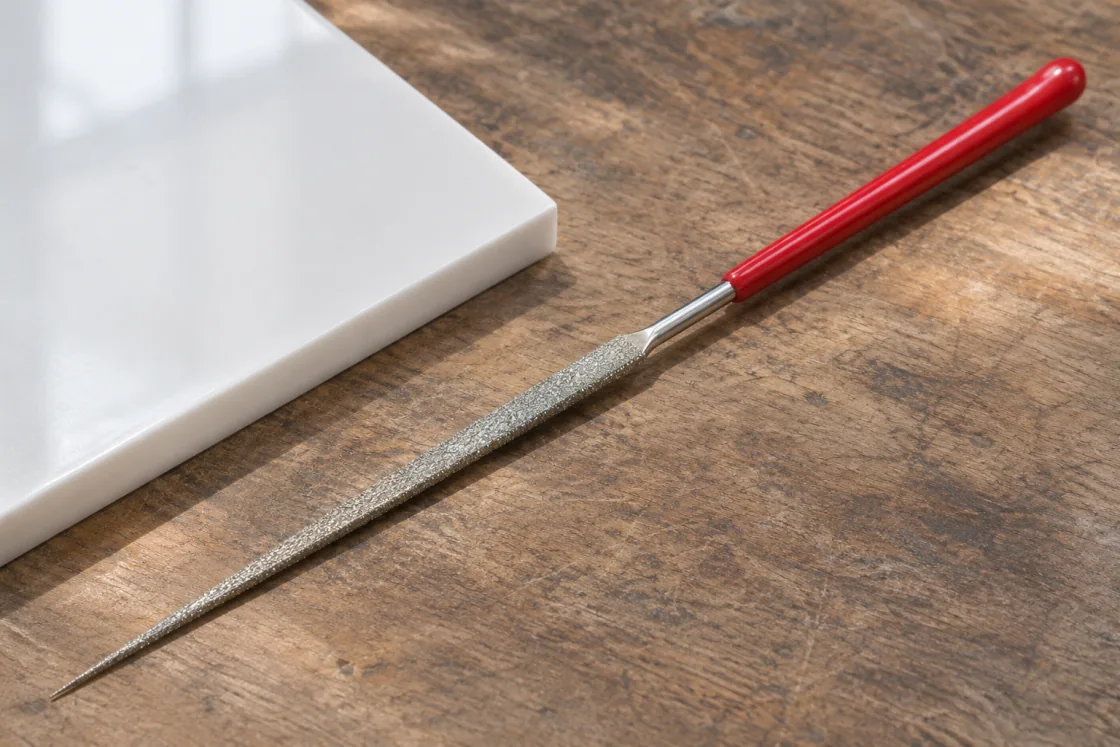
An Offcut Test for Edge Quality
Test each requested grit on a comparable offcut from the same material. Record the exact profile, contact position, visible edge scratches or chips and any coating wear you observe. Keep a photograph of the surface under consistent light with each test result.
- Glass or ceramic
- Name the material and access shape
- Trial file
- Verified profile, grit and active length
- Accepted result
- Observed surface and coating condition
A Set or Bulk Order by Configuration
A useful quote names the grit, length, coating and exact profile on each line. Review the pack contents and supplier description for each tool to make its intended use clear at the counter.
- Abrasive
- Grit designation and confirmation standard
- Profile
- Section and usable dimensions
- Pack
- Number of tools and their individual shapes
- Evidence
- Matched trial piece and order reference
Protected Diamond Files at Receiving
Specify packaging that separates working surfaces if you need it. A labelled pack or slot per file helps staff identify the grit and shape without inspecting every coated tool during receiving.
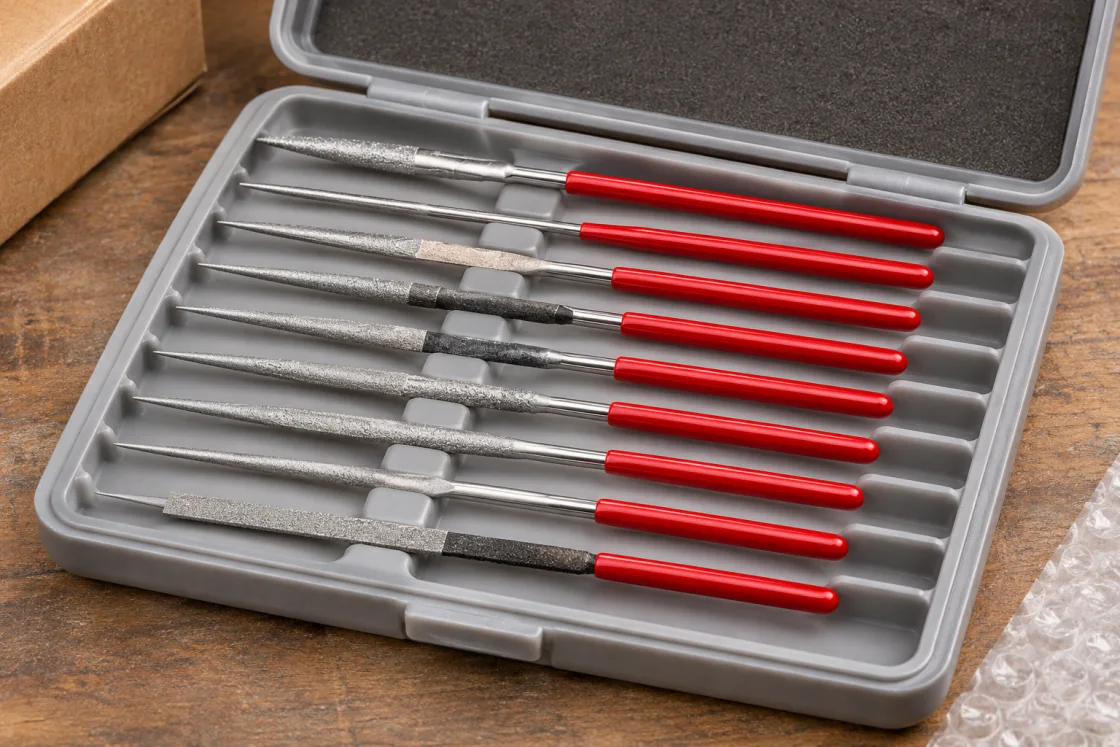
Steel Needle Files for a Separate Stock Line
Order by exact profile even if the grits match. A round tool is useful as a candidate for a small curved opening. A flat or knife profile has a substantially different contact area. A regular steel needle file set is a different stock line for workshop small parts.
- Glass and ceramic
- Use grit and profile records
- Small metal parts
- steel needle file selection
A Grit Sample Request for Your Workpiece
Send the material, feature size and finish you need, plus the grit designations and shapes you want to compare. We can discuss the corresponding sample set.