
Hoof Rasp Range and First Selection Guide
Start with how much of the face needs to contact the hoof and how you want to hold the tool. Our range covers straight double-sided, radius, block and compact handled tools. This first selection helps you reach the right model guide when your goal is width, cut, length or grip. Open the complete Buying Guides directory for the full range of order decisions.
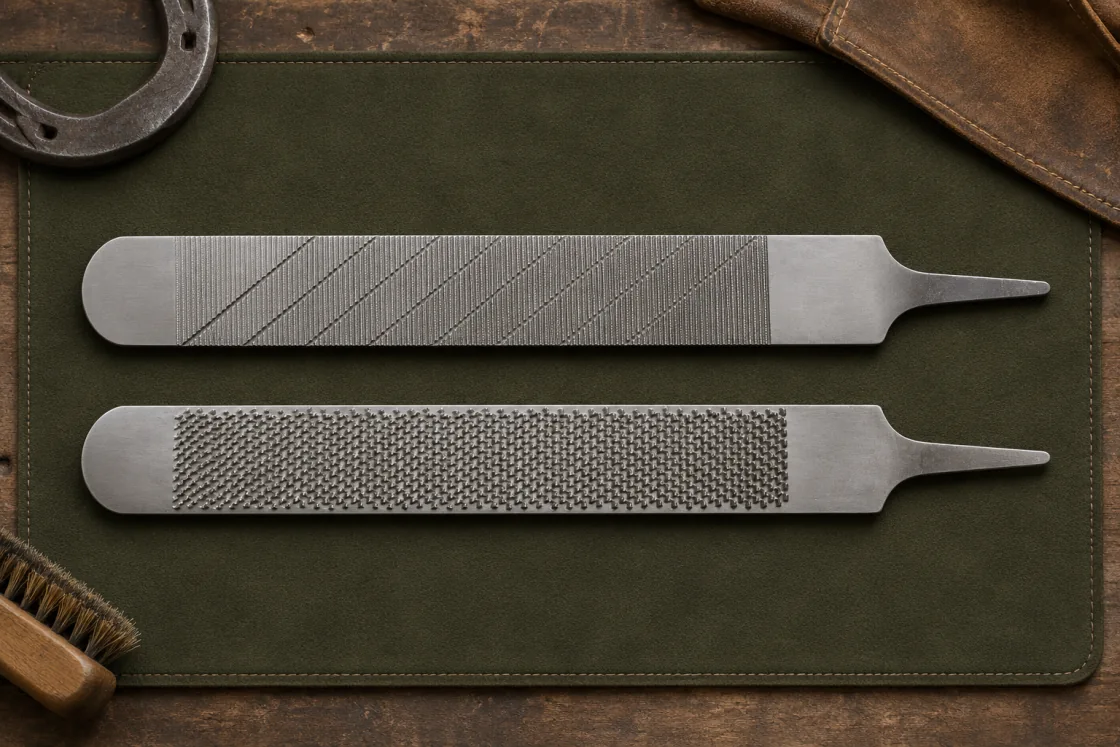
Four Starting Points for Hoof Rasp Selection
These are catalogue entry points for different requirements. Nominal labels identify the tools. Request usable face and grip dimensions if those govern your selection.
| Tool role | Catalogue example | Next decision |
|---|---|---|
| Straight two-face tool | Flat model, 9 or 14 in, 45 or 50 mm width | Compare the 14-inch widths |
| Curved contact | Radius rasp, coarse and fine teeth listed | Compare the curve and block formats |
| Short local surface | Flat block and curved block, both 104 mm listed | Compare 40.5 mm flat and 38.5 mm curved body widths alongside shape |
| Compact grip | Rubber-grip mini, 44 mm width listed | Compare compact grip options |
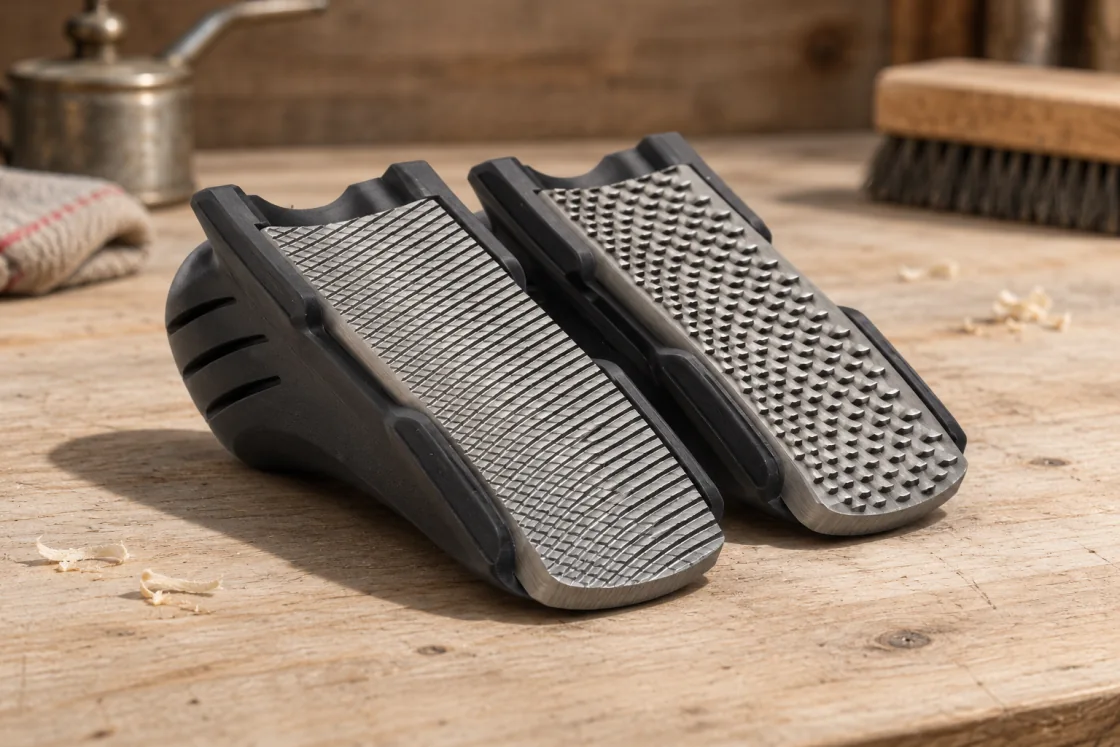
A Short Contoured Working Surface
A short block leaves a smaller contact zone than a full-length rasp. The curved block lists 104 × 38.5 × 4 mm and coarse or medium. The flat block lists 104 × 40.5 × 4 mm. Compare the usable tooth patch on each shape if your order depends on localized access.
Two Working Faces and a Dedicated Finish
A coarse rasp side and a fine file side give a two-stage combination on selected models. A separate 14-inch finishing model is another order line if your team wants a dedicated fine finishing tool. Choose by what the working face needs to do for your application.
- Combination tool
- Coarse rasp side and finer file side in one selection
- Dedicated finish
- Confirm the last-pass tool, useful length and cut
The Grip Is Part of the Selection
The steel-handled stainless mini and rubber-grip mini illustrate different held configurations. For a tool sold without a handle, order by tang and socket measurements. Keep the measured fitted length when it determines the kit or storage space.
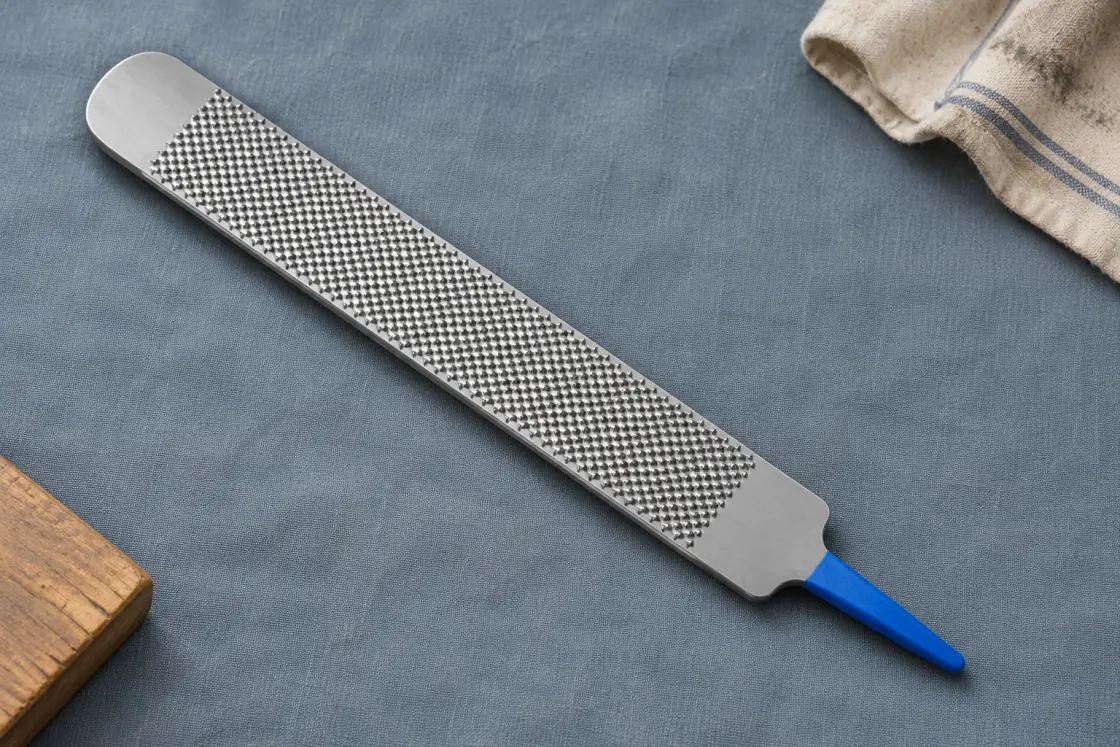
Measure the Three Lengths That Can Differ
Some tools are listed by a nominal inch label alongside a metric body length. Measure the toothed portion and the assembled tool separately when you replace a model or fit an existing tool roll.
- Catalogue size
- The listed model label and dimensional row
- Active length
- The actual distance between start and end of teeth on each face
- Assembled length
- End-to-end with the selected fitted grip
Fit the Material and Cut to the Sample Order
A material name and a cut name answer different questions. Use the catalogue for a shortlist, then confirm the actual grade, working area and cut of the version you will receive.
- Stainless listings
- Confirm the selected grade and exact model
- T12-labelled choices
- Compare grade, face hardness and model references
- Handled or bare
- Compare kit and tang fit
Working Reach for a Longer Tool
Our 16-inch coarse stainless rasp and 18-inch finishing rasp are nominal long candidates. Check the active face and finished length for your intended stock, then link the version to the approved sample.
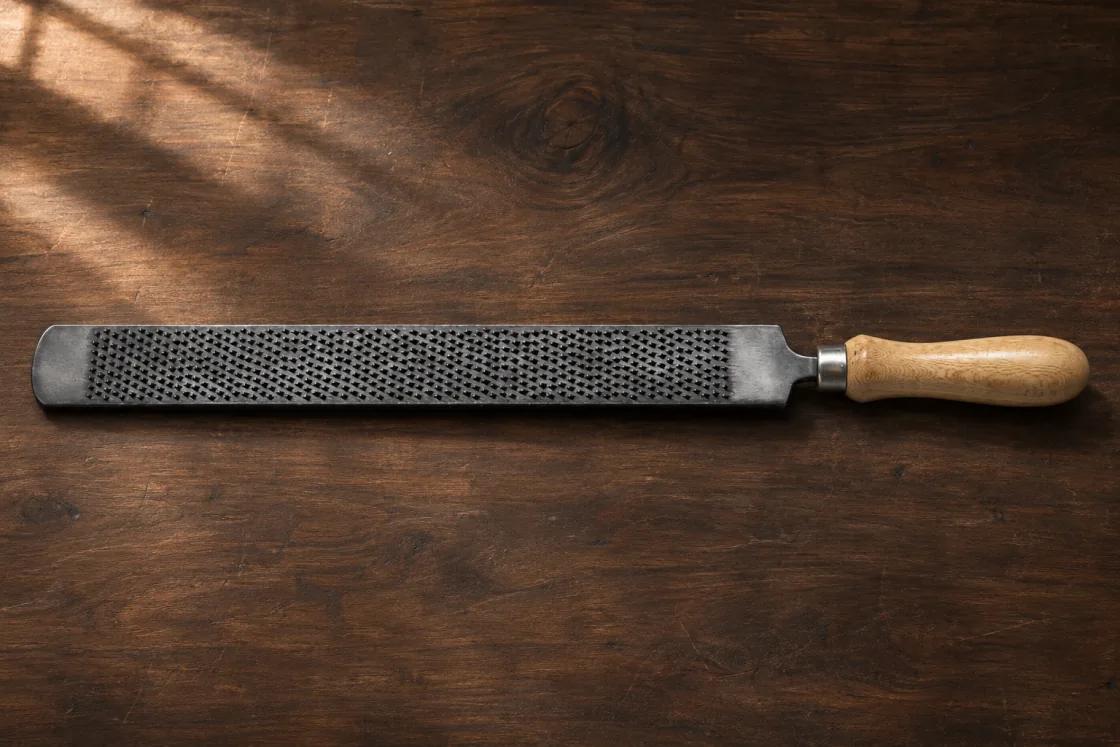
Detailed Comparisons for the Next Decision
Use these guides after you choose the family. Each provides a model-level or measurement comparison.
Submit a Rasp Shortlist
Send one product link and configuration per line, plus your trial or production quantities. Include the shape or handle drawing where fit matters.