
Curved and Block Hoof Rasps by Contact Shape
The dimensional tables give two short profiles you can compare directly. The flat block measures 104 × 40.5 × 4 mm in its listing, while the curved block is listed at 104 × 38.5 × 4 mm. Both are sold as 4-inch blocks. The curved radius rasp offers a longer contoured tool profile with coarse and fine teeth.
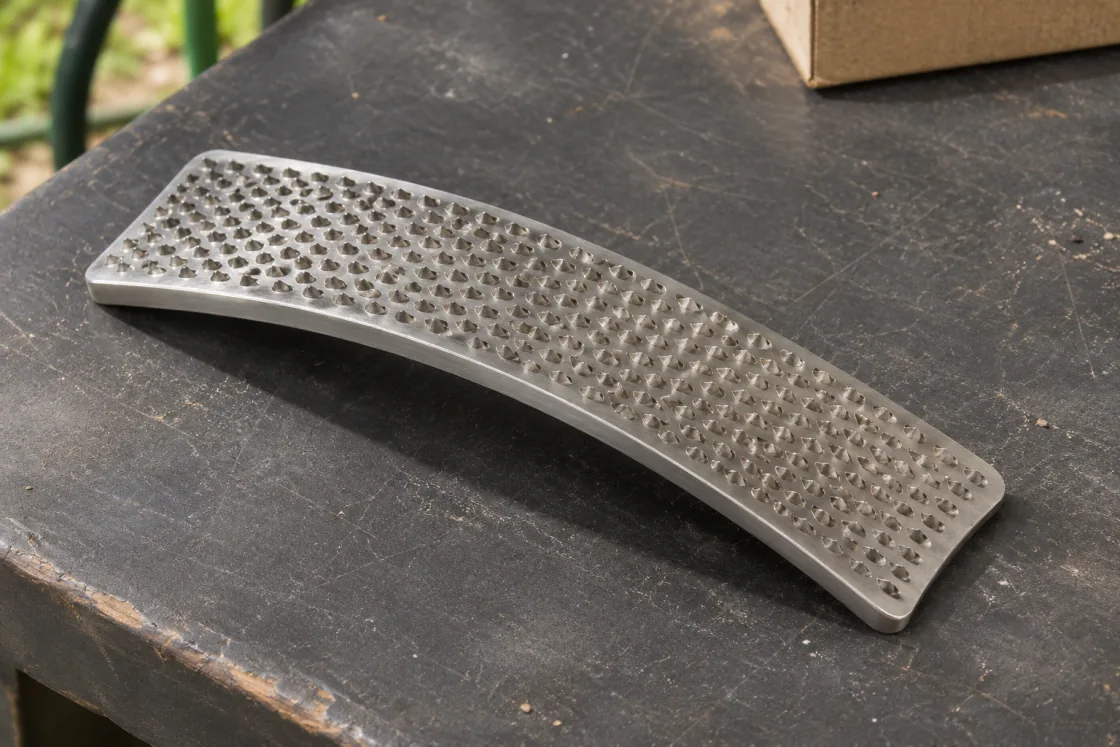
Flat Block, Curved Block and Radius Rasp
Short tools can have the same length and different contact geometry. Check the curve and the active face because body measurements describe the catalogue tool.
| Profile and model | Catalogue size or cut | Decision before purchase |
|---|---|---|
| Flat 4-inch block | 104 × 40.5 × 4 mm, coarse or medium, alloy steel | Compare a flat local working patch and support at the edges |
| Curved 4-inch block | 104 × 38.5 × 4 mm, coarse or medium, alloy steel | Check the curve and which part of the teeth contacts |
| Curved radius rasp | Stainless, coarse and fine teeth | Compare the end profile and where each cut is placed |
| Curved double-sided rasp | Separate stainless curved catalogue model | Get the usable width and the curve from the quoted sample |
A Curved Double-Sided Model
Our curved radius rasp lists coarse and fine teeth. The curved double-sided stainless steel rasp is another model to compare. Ask for a side view of the curvature and a face view identifying the coarse and fine sides.
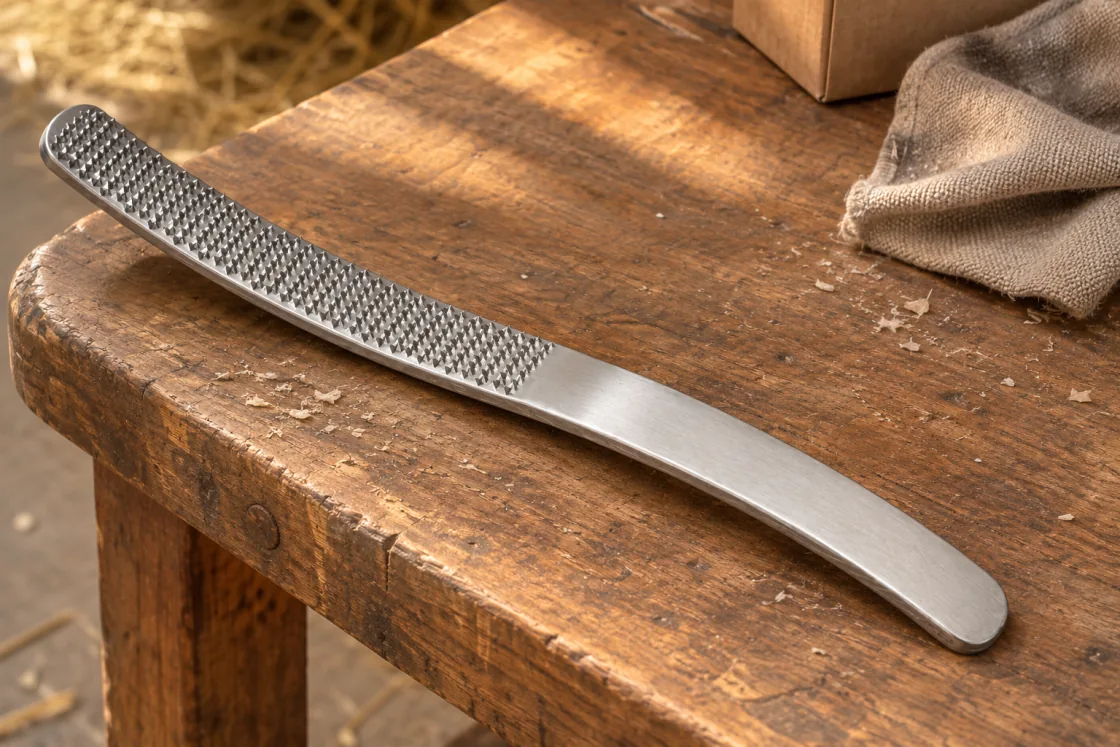
A Profile Drawing for the Contact Patch
Show a side outline and a view across the working face. The two short blocks differ by 2 mm in listed body width. Their larger difference for purchasing is the shape of the contact. Mark on the drawing where you need a short flat or curved patch.
- Side profile
- Identify the contact area and the curved or flat outline
- Active patch
- Measure the usable teeth, width and length
- Access
- Record clearance around the block or under the selected grip
The 4-Inch Flat Block
Use the 4-inch flat block as the catalogue reference for a short flat option. The listing identifies coarse and medium cut choices. Compare the production sample’s actual face width and corners with the area your buyer plans to reach.
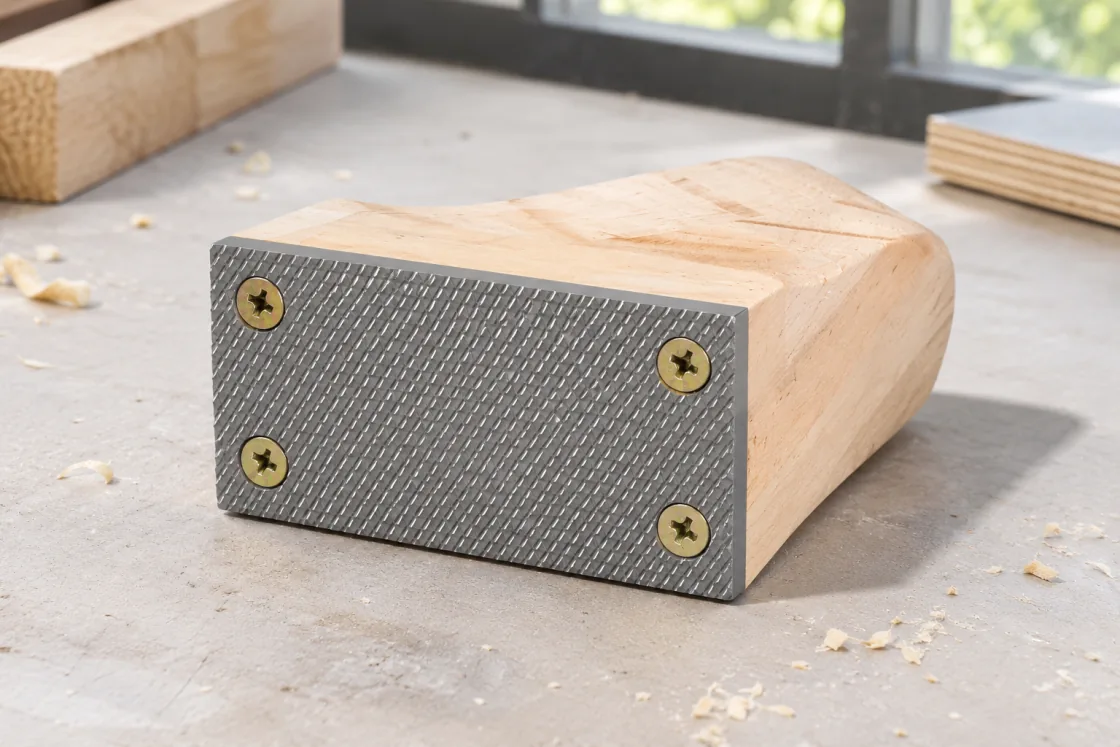
The 4-Inch Curved Block
Both block listings give HRC 60–65 and identify coarse or medium cut categories. Use those as catalogue references tied to the selected version. Request an actual sample and relevant measurement evidence before using those figures as acceptance criteria.
- Flat block
- Check a short flat patch and edge clearance
- Curved block
- Check curve, face orientation and local reach
A Sample Check Before Putting a Shape in Stock
Identify the contact area, compare the profile and check the actual working surface. Save the chosen grit or cut terminology with the catalogue model. One marked reference makes future purchasing simpler.
- Shape
- Set the contact profile
- Sample
- Compare usable area and handling
- Stock
- Record cut and model separately
The Curved Block in a Compact Setup
A short tool can be easier to place when room is limited. Give buyers the tool’s profile and a scaled view rather than assuming a compact shape is enough. The handled mini guide covers a different grip-based choice.
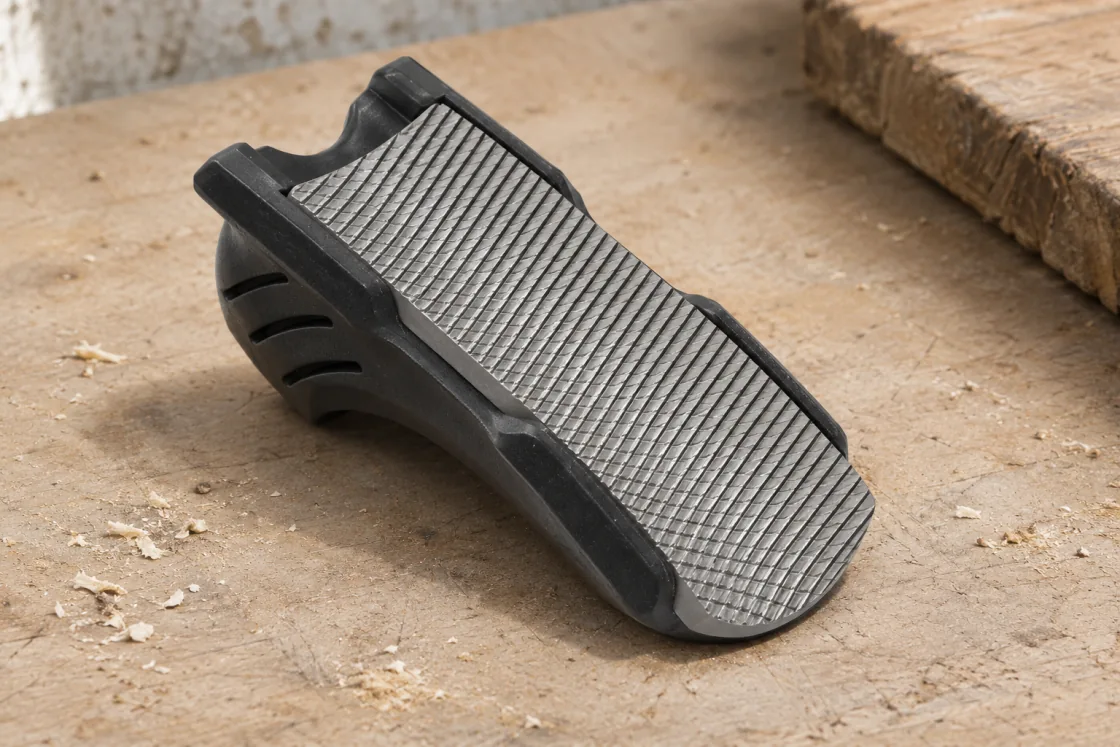
An Assortment Based on Working Shape
A full-length curved tool, a short flat block and a short curved block make clear stock choices. Use catalogue names and measured drawings to separate them at receiving and at the counter.
- Contour
- Full-size curved face
- Local flat
- Flat block
- Local curve
- Curved block
A Shape Comparison for Your Order
Share the working area, clearances, cut and approximate quantity. We can discuss which curved or block samples to include.