
Handled and Bare-Tang Hoof Rasps for Farrier Teams
For an assembled kit, compare our 14-inch carbon steel rubber-handled rasp and stainless rasp with a wood grip. If you have your own handles, start with the silver handleless model or the double-sided stainless bare model. Measure the tang and socket together before you place a batch order.
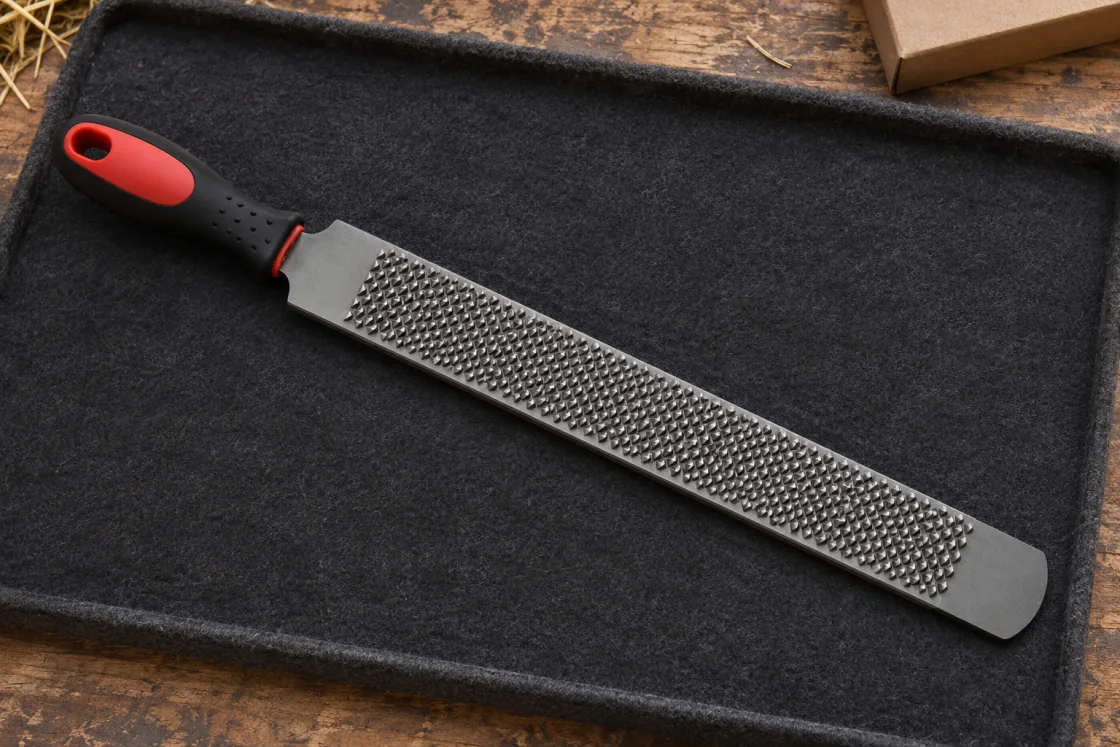
Handled Kits and Bare-Body Orders
The catalogue description tells you which assembly format to quote. Compatibility depends on the fit of the exact pieces you intend to use.
| Catalogue option | Listed handle format | Confirm for the order |
|---|---|---|
| 14-inch carbon steel model | Rubber handle, silver choice | Exact width, supplied grip and finished length |
| Wood-grip stainless model | Tanged and double-sided, wooden handle mentioned | Whether it ships fitted and which size is quoted |
| Bare silver stainless model | No handle, stainless and silver in selectors | Tang geometry and exact size, with both face cuts |
| Bare double-sided stainless model | Without a handle, several finish choices | Name the colour and obtain the tang drawing |
Ready-Handled Models for Teams and Schools
Consider the rubber-handled carbon steel rasp and wooden-handled stainless steel rasp. Compare handle shape, overall tool length and the space around the shoulder. A small sample set can help a team settle on one kit specification.
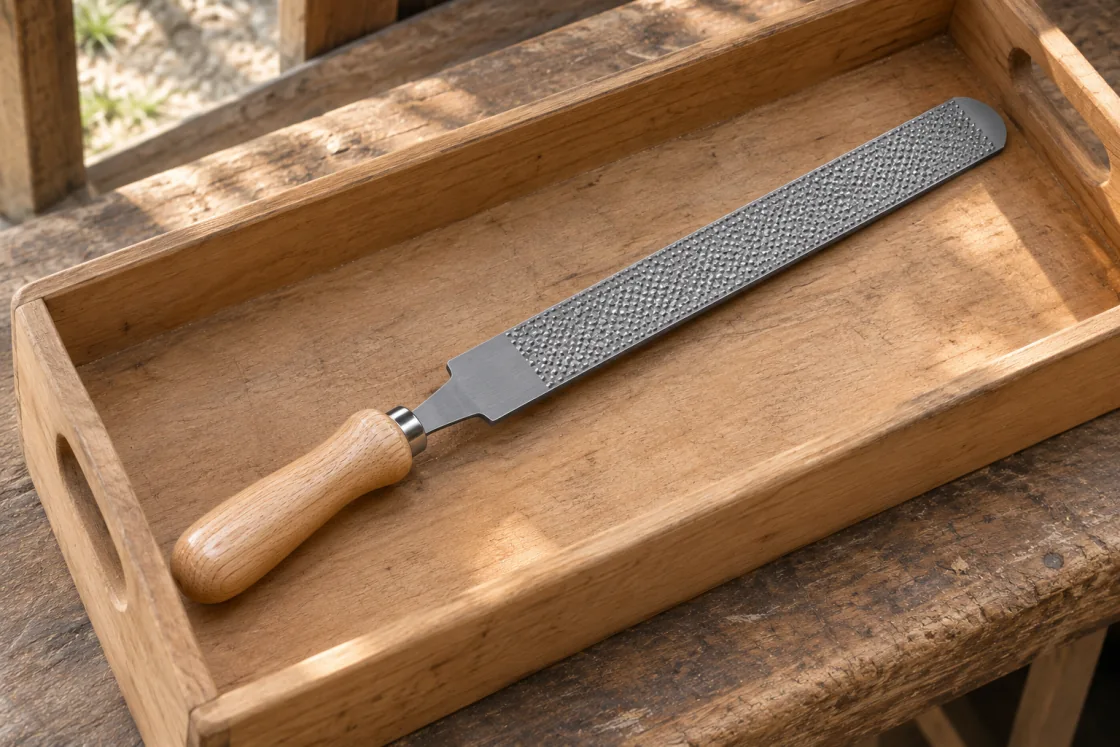
A Kit Order That Can Be Repeated
List the rough and fine functions of the tool, the supplied grip and the count you need. Add the same model and configuration to the paperwork when you request replacements or ask about spare equipment.
- User count
- How many kits and spare units
- Tool specification
- Model, faces and length
- Grip
- Material and assembled dimensions
Stainless Rasp Bodies Sold Without a Handle
The stainless unhandled rasp and stainless file and rasp without a handle are catalogue candidates. Look at the actual tang and shoulder on both before placing the order. A diameter or width reading from one position leaves other fitting points open.
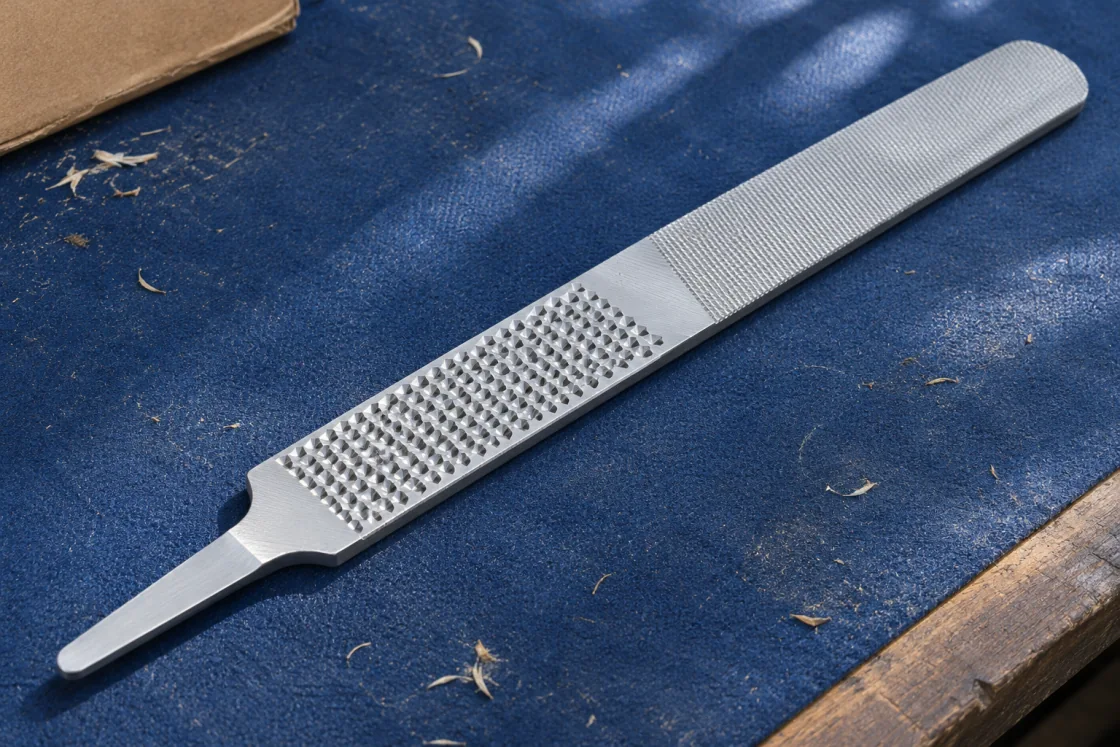
A Fit Drawing for a Stocked Handle
Measure the width and thickness near the start of the tang and near its end. Compare taper, socket opening and usable depth with the agreed insertion and shoulder clearance. The file reference manual identifies the tang and heel as separate features.
- File end
- Tang root, tip, taper and shoulder
- Handle opening
- Section shape, width and depth
- Fitted assembly
- Seating depth and clearance on a matched sample
An Assembly Check for Bulk Purchasing
Keep your own sample handle with a matching blade when you assess fit. Record whether each assembly feels stable in its normal use, and capture what stays consistent between pieces. Ask for a separate line if you want us to quote the finished assembly.
- Blade sample
- Exact unhandled model and tang drawings
- Handle sample
- Socket and approved position
- Order definition
- Bare rasp, complete tool or separate parts
The Bare Body and Handle as Separate Items
Place the components next to each other when you compare the measurements. The replacement handle guide starts from the receiving handle, while this page starts from the blade or complete tool you need to buy.
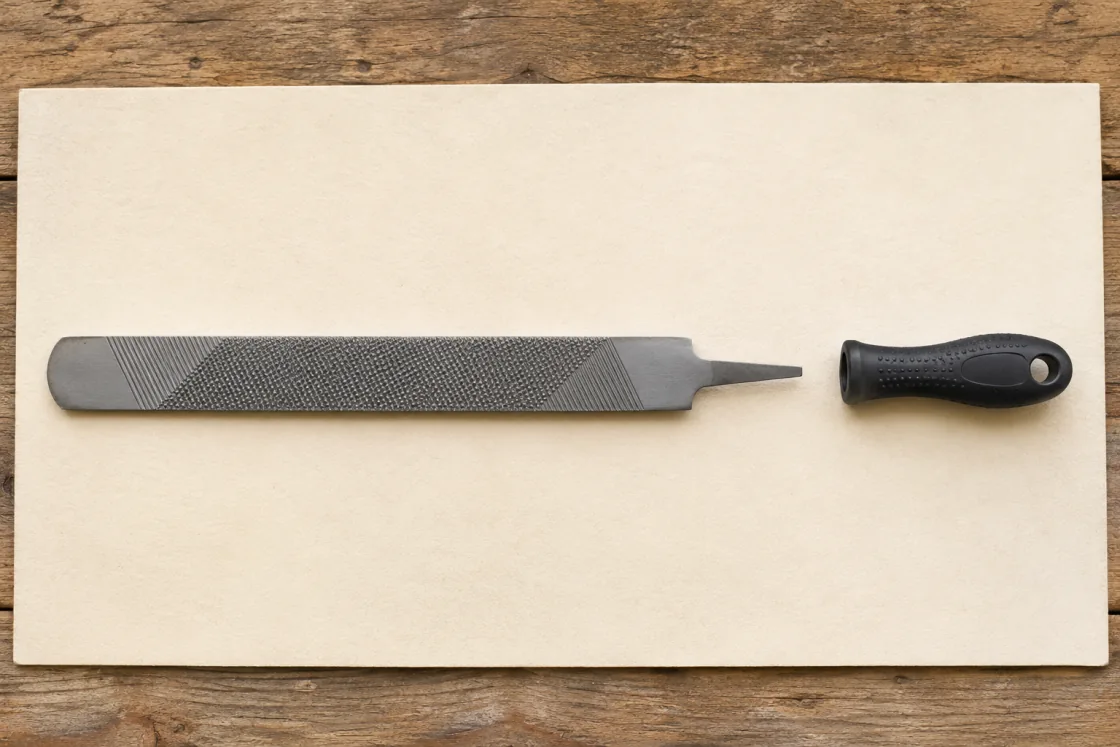
A Kit Specification That Survives Reorders
For ready-handled units, give us the desired tool and fitted grip as one line. For a bare unit, attach the matching handle drawing and keep approval photos. If the same order also carries spare handles, give each model its own line.
- Ready-to-use line
- Blade, grip and assembled length
- Bare line
- Blade and accepted tang geometry
- Spare line
- Handle, fit reference and quote quantity
A Handled Kit or Bare Rasp Quote
Send your kit count or existing handle drawings, the desired face and the target volume. We can discuss the models that are useful to sample first.