
Coarse Hoof Rasp Samples for Hard, Dry Hooves
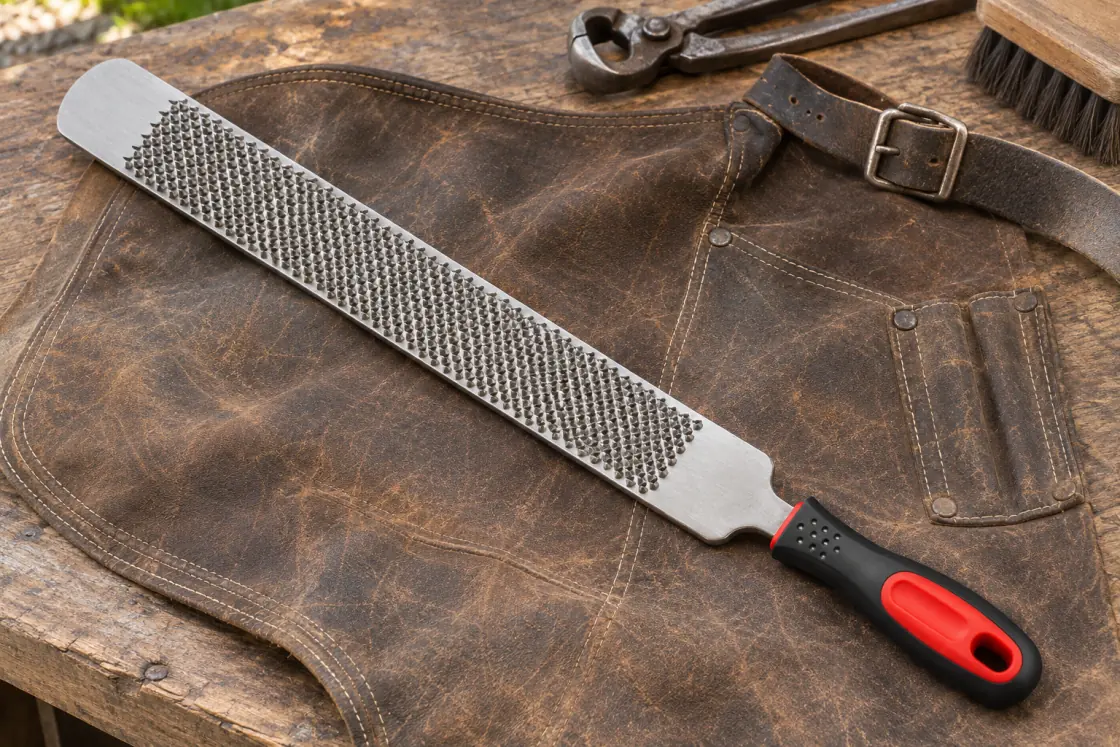
For a professional sample trial, compare the handled 14-inch coarse-tooth rasp, the 16-inch coarse stainless model and your shop’s usual rasp. The 14-inch listing has two handled variants. The 16-inch listing names a coarse double-sided cut. Compare the teeth, active area and handling in consistent conditions before selecting a bulk configuration.
Coarse Samples and a Finishing Reference
These are model references for a professional buyer to compare. A coarse listing identifies the tooth category. Your documented sample result should support the order choice.
| Catalogue model | Use stated in the listing | Record during the trial |
|---|---|---|
| 14-inch coarse rasp | Double-sided and handled, two variants listed | Identify the exact variant, measure face and note control |
| 16-inch coarse stainless | Coarse double-sided tool with longer nominal length | Compare usable length, tooth clearance and actual grip |
| Flat coarse and fine combination | 45 or 50 mm body, coarse and fine faces | Use a familiar reference for contact area and feel |
| 14-inch finishing file | Fine finishing use, silver selection | Keep final finish observations separate from coarse shaping |
A Detailed View of Coarse Tooth Geometry
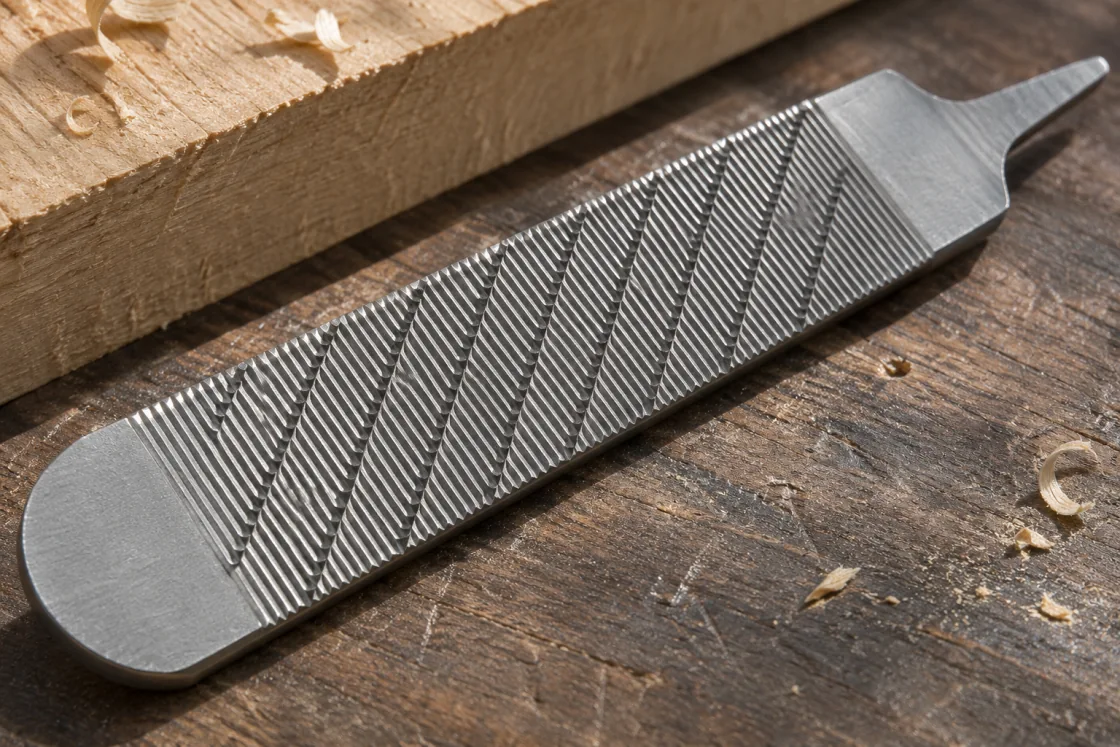
A side-lit view of the teeth makes it easier to compare spacing and direction. Ask for the coarse face to be identified and for working width to be measured at the same place on each trial tool. Use the flat coarse and fine model as a separate reference if you already work with that layout.
The 14-Inch and 16-Inch Sample Lines
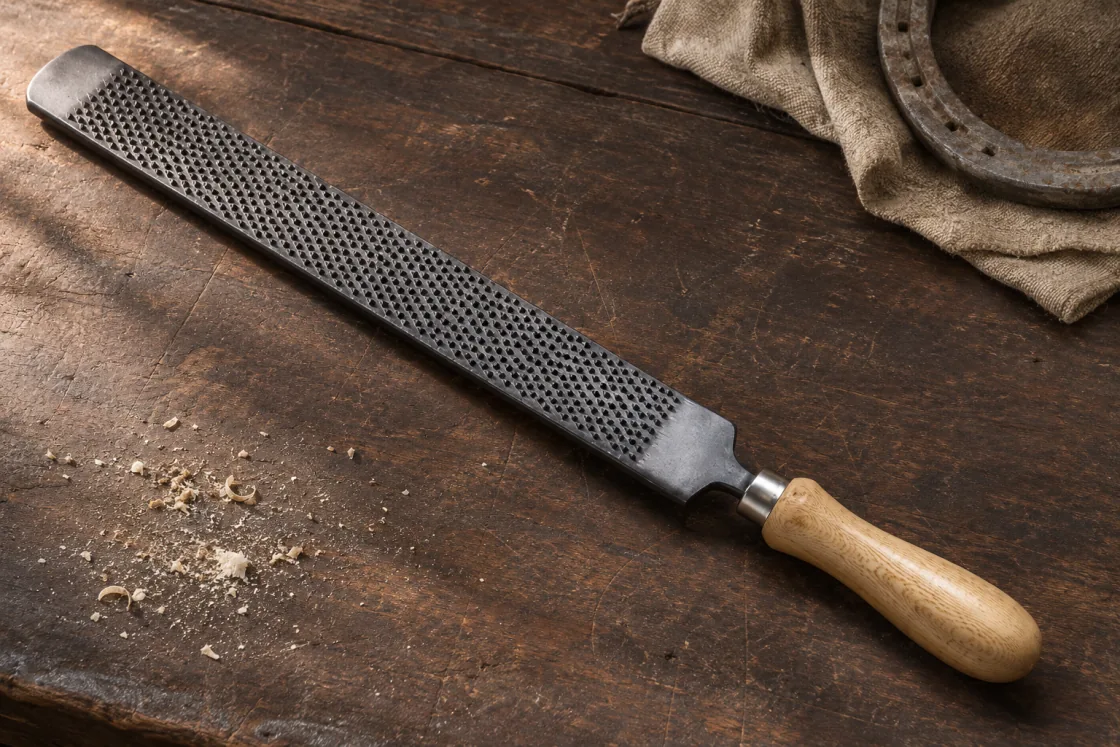
Keep the actual active face, handle and cut pattern with the sample identifier. Tools advertised at different nominal lengths may have similar working areas, which makes a measured comparison valuable.
- 14-inch coarse model
- Compare active face and handled control
- 16-inch coarse model
- Compare reach, grip and debris clearance
The Grip and the Tool’s Working Reach
During a qualified trial, note how the grip and shoulder influence clearance. A longer tool may put more of the active face into use in your setup. Record the actual toothed length and the feedback from the same professional use conditions.
A Repeatable Professional Sample Review
Identify the model, both cuts, working area and why the sample is being considered. Have a competent evaluator compare the tools under equivalent conditions and photograph the teeth after use. Agree common evaluation points such as control, retained material and surface quality.
- Before comparison
- Catalogue choice, sample and working area
- Performance observations
- Control, material trapped between teeth and overcut marks
- Approval
- Condition observed, approved tool and any limitation
Evidence for Selecting the Sample
A description that says coarse tells you the catalogue category. Your own review can establish whether it meets your order requirements in the conditions you deal with. Keep sample results tied to a named model and record.
- Catalogue evidence
- Nominal length, product material and listed tooth class
- Measured evidence
- Working width, usable length and actual grip
- Trial evidence
- Observed handling and face condition
A Dedicated Finishing Tool for the Next Stage
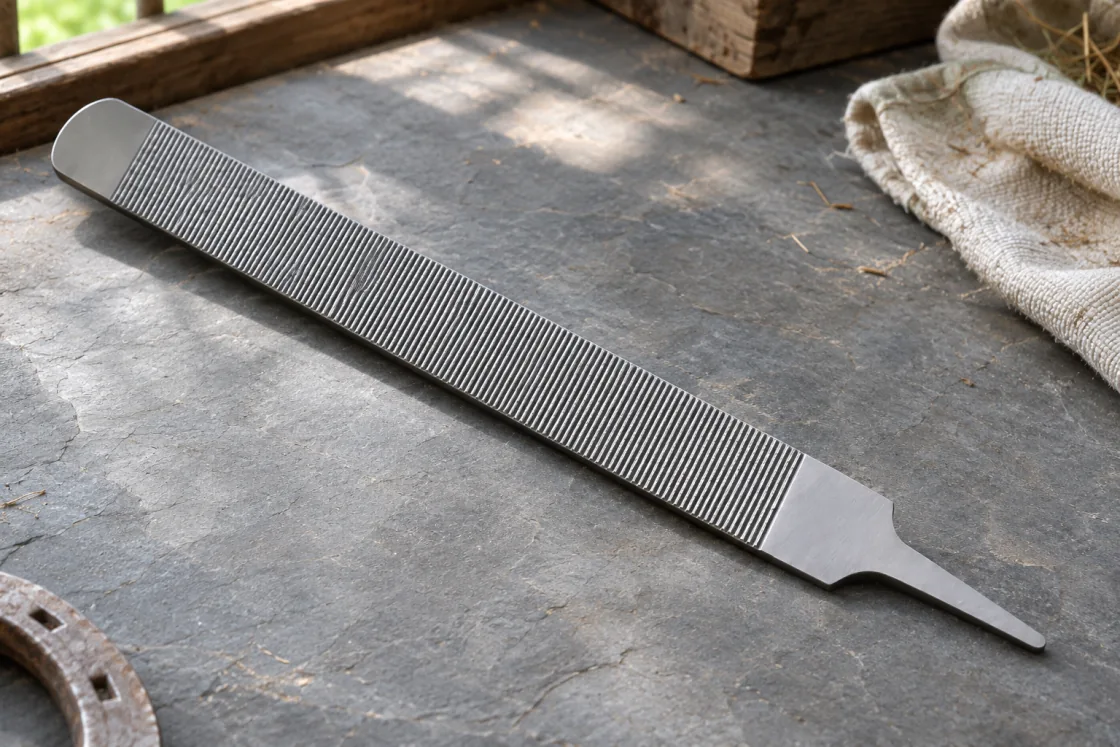
If your team separates fast removal from finishing, compare the 14-inch farrier finishing file as a distinct order line. Its purpose is easier to assess alongside the agreed surface target for that stage.
The Evidence for Your Bulk Choice
Write down the observed face clearance and control for the work your team actually does. If the catalogue says coarse but the sample clogs faster than your current tool, record the conditions and photograph the retained material. That outcome is useful to the quote even when the nominal length matches.
- Compare reach
- Measured length of the active coarse face
- Compare contact
- Working width and grip clearance
- Compare result
- Use notes, tooth condition and retained sample
A Coarse Rasp Trial for Your Work
Tell us which dimensions and face you want to compare, the work conditions and your approximate batch quantity. We can use those details to discuss the shortlist.