
Cabinet Rasps for Joinery and Visible Edge Finishing
Use the fine cabinet rasp to compare fit and the polished cabinet file to compare visible finish. The cabinet rasp’s 8-inch row lists 200 × 23.0 × 4.5 mm, with medium or fine cut shown for the model. Both listings offer flat or half-round profiles. A representative joint and finished edge give you two different acceptance samples.
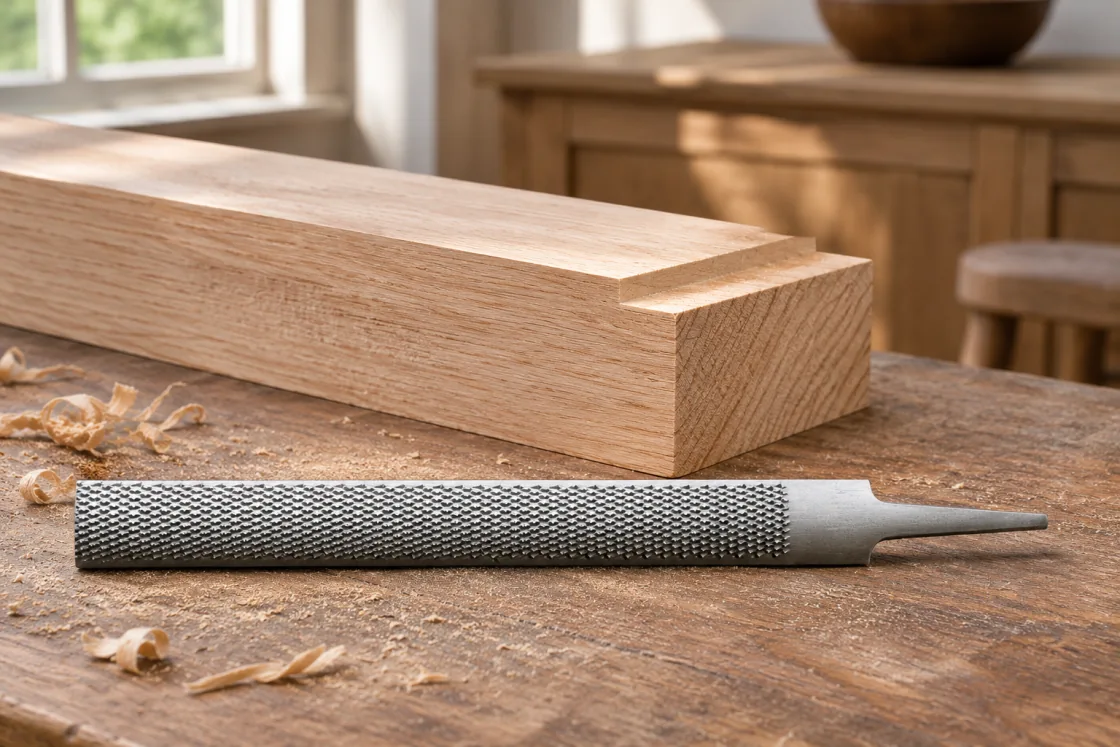
Tools for Fitting and Visible Edges
Keep fit dimensions and surface quality separate in your order. The steel dimensions listed are catalogue references.
| Job | Catalogue choice | Sample acceptance |
|---|---|---|
| Tight joint and shoulder | 8-inch cabinet rasp lists 200 × 23 × 4.5 mm | Check access, controlled removal and whether the parts seat |
| Wider working area | 10-inch cabinet rasp lists 250 × 26.8 × 5.5 mm | Use the wider body only where access and shoulder clearance suit it |
| Visible edge | Polished cabinet file, medium or fine precision file cut, 6–12 in catalogue range | Record the final marks and the next finishing step |
A Fine Cabinet Rasp for the Fitting Stage
Our fine cabinet model lists medium and fine options and optional flat or half-round profiles. Choose a sample around the surface you need to fit. Compare its useful face width and contact near adjoining wood.
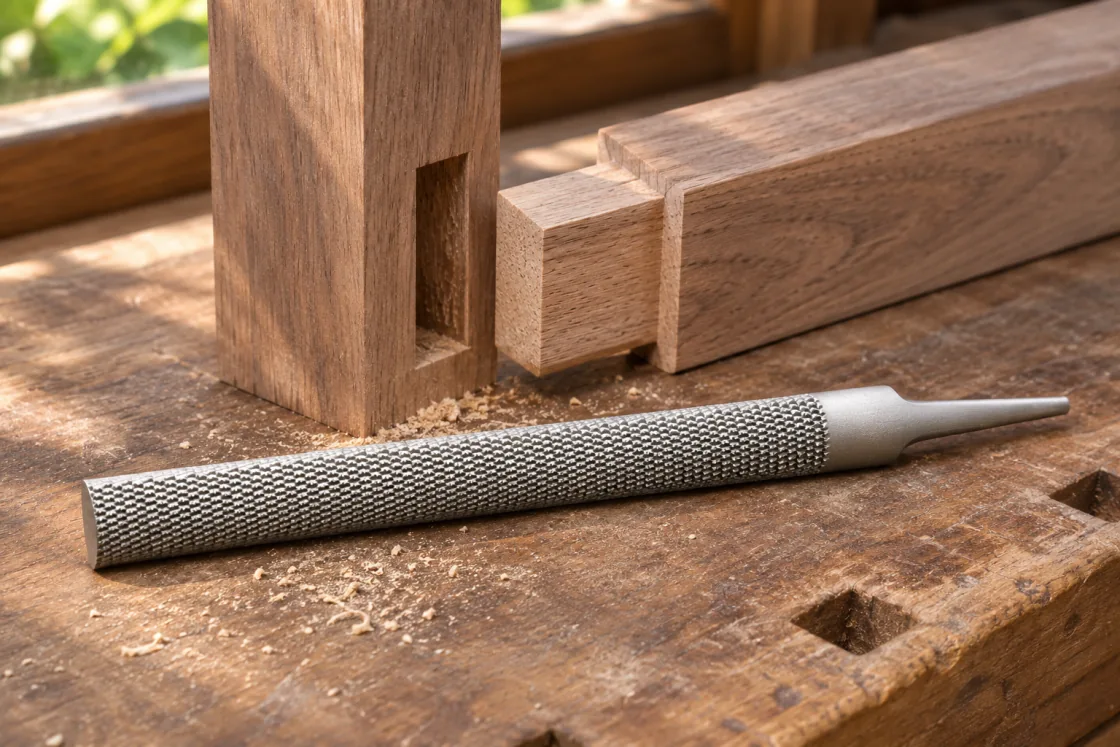
Measurements That Protect the Adjacent Face
Measure the joint opening and the distance from the edge to the surface that needs preservation. Use a marked offcut to compare the flat and half-round candidates before you select the stocked configuration.
- Joint
- Seat width and depth, material and critical shoulder
- Tool
- Measured working face and the shape selected
- Finish
- The part of the edge the buyer will see
A Polished Cabinet File for Fine Work
Our polished cabinet wood file lists a precision file cut and a polished finish. Use a small piece of the same wood to compare its marks and your next surface treatment. Record which version leaves the sample you accept.
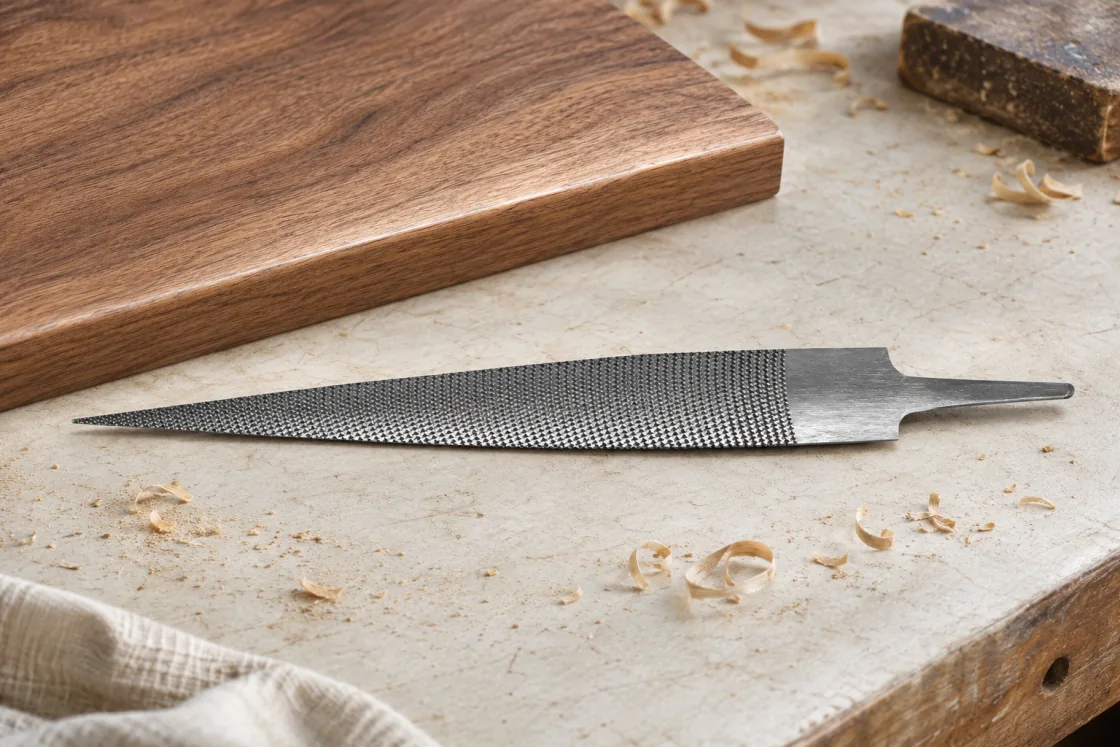
Selection by Wood, Cut and Finish
The two listings cover 6, 8, 10 and 12-inch nominal lengths and medium or fine cut choices. Confirm the exact section and grade you request. State your wood species and whether the surface will be visible.
- Part
- Species, joint or edge and surface requirement
- Tool
- Catalogue model, section and cut
- Trial
- Actual fit and finish observed
- Approval
- Accepted sample and order line
Two Samples for Two Purchase Decisions
Retain a fitted joint sample with the actual file reference and a separate visible-edge sample. Use similar sections of the same wood to compare finish. The wood properties reference explains how moisture and dimensional behaviour can vary by wood and direction.
- Fit proof
- Accepted seat and adjoining faces
- Finish proof
- Accepted marks and visible edge
- Repeat order
- Catalogue part, size, cut and retained samples
The Visible Edge as a Purchasing Reference
A picture with an agreed finished sample and a clear edge view helps you communicate the result to a supplier. Plan the test around the next process, such as sanding or the finish your shop normally applies.
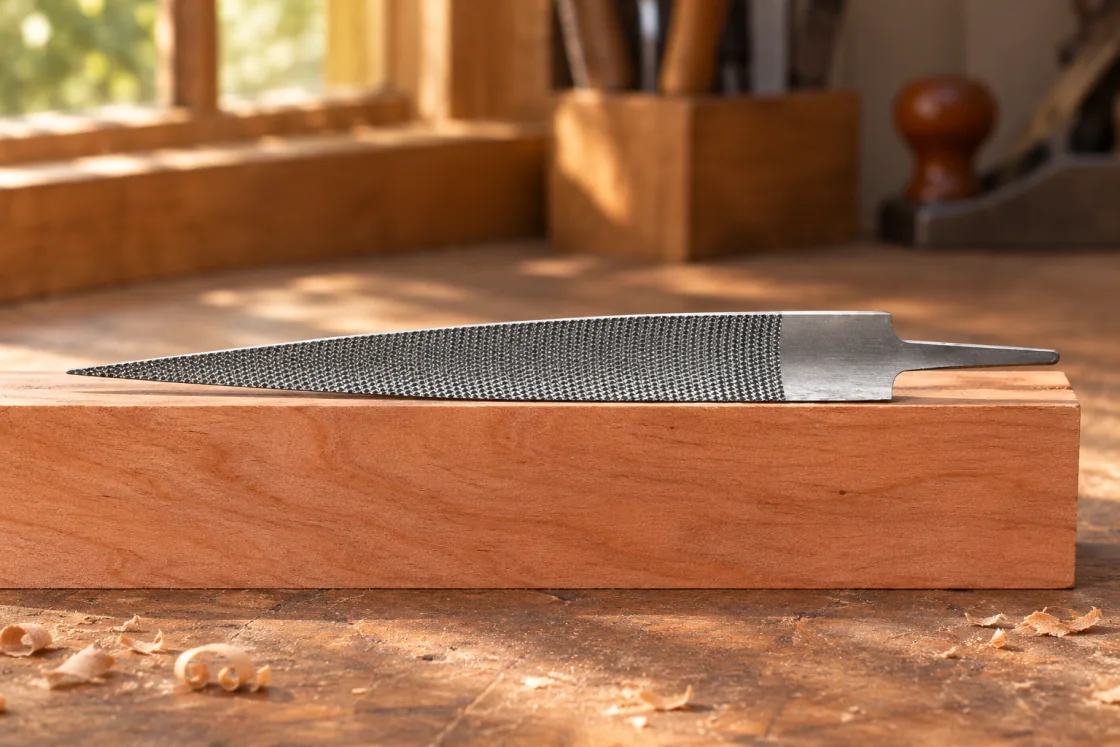
A Clean Separation from Bulk Shaping Stock
Give the fit and finish tools distinct order lines. If your team also needs a coarse file or a portable multi-face tool for initial shaping, use the wood rasp profile guide.
- Initial shaping
- Dedicated profile or 4-in-1
- Joint fit
- Fine cabinet rasp
- Visible edge
- Polished cabinet file
A Joinery and Fine Finish Sample Request
Send the wood, joint dimensions, desired edge and number of samples. We can compare the listed cut and profile options for your work.