
Private-Label and Neutral Packaging for Hoof Rasps
Choose the rasp before you finalize its packaging. Our round-head carbon steel model describes a coarse rasp face, a smooth file face and custom branding. The double-sided model has a 14-inch layout that can be specified by width. Keep the tool specification, marking artwork and packaging configuration on distinct quote lines.
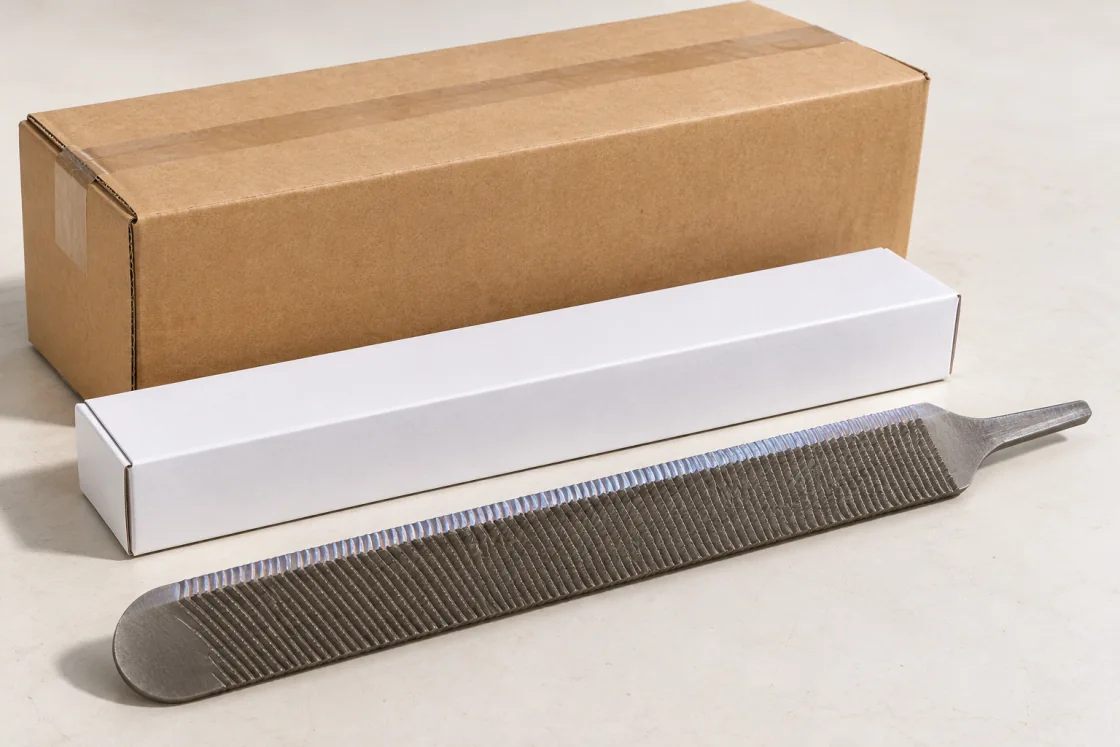
Packaging Choices and Catalogue Starting Points
A tool marked with your brand, a printed unit box and a neutral wholesale carton serve different purchasing needs. Check the product description for the option being discussed and confirm the actual pack with a sample.
| Order choice | Catalogue starting point | Request to send |
|---|---|---|
| Branded round-head tool | Carbon steel combination rasp lists custom logo and pack options | Mark position, desired grip and approved logo artwork |
| Retail unit | 14-inch double-sided catalogue model | Width, individual package, barcode artwork and target retailer |
| Neutral bulk | 16-inch coarse stainless rasp lists individual packing | Ask which protective sleeves and plain carton configuration can be supplied |
The Rasp Model Comes First
Our double-sided rasp lists a 14-inch configuration. The round-head hoof rasp is listed for custom branding. Pick the tool shape and both working faces before asking for logo placement, retail printing or an unmarked pack.
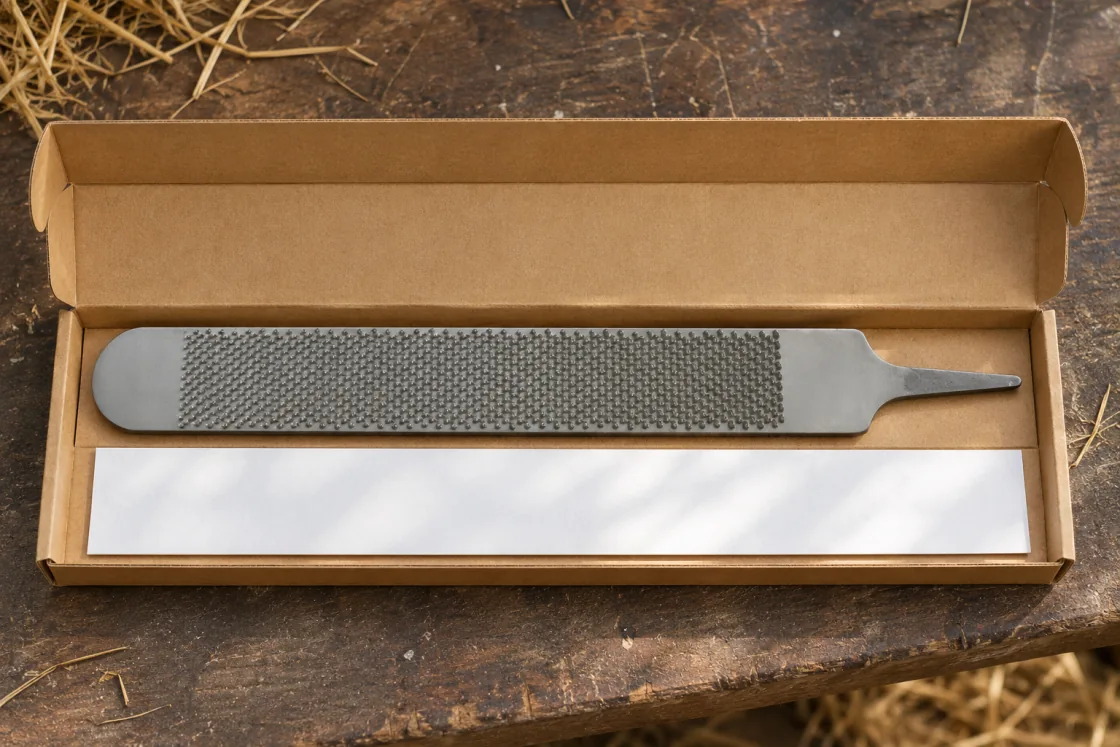
Tool Mark, Unit Pack and Outer Carton
Keep the tool mark and the packaging artwork separate. A position that is easy to scan at retail may differ from the marking your warehouse wants on a corrugated case. If your order needs barcodes, check symbol size, location and print quality on the physical pack. See the barcode quality guidance.
- Tool
- Mark location outside the requested tooth area and approved artwork
- Sales unit
- Barcode, pack dimensions, insert and protective method
- Case
- Units per carton, receiving label and any separate case identifier
A Sample Pack Before Production
Review a physical sample if your box fit, print or barcode matters. A finished rasp and a blank packing prototype can help you test clearances and point out where protectors or dividers are needed. Confirm the materials that will be used for the final pack.
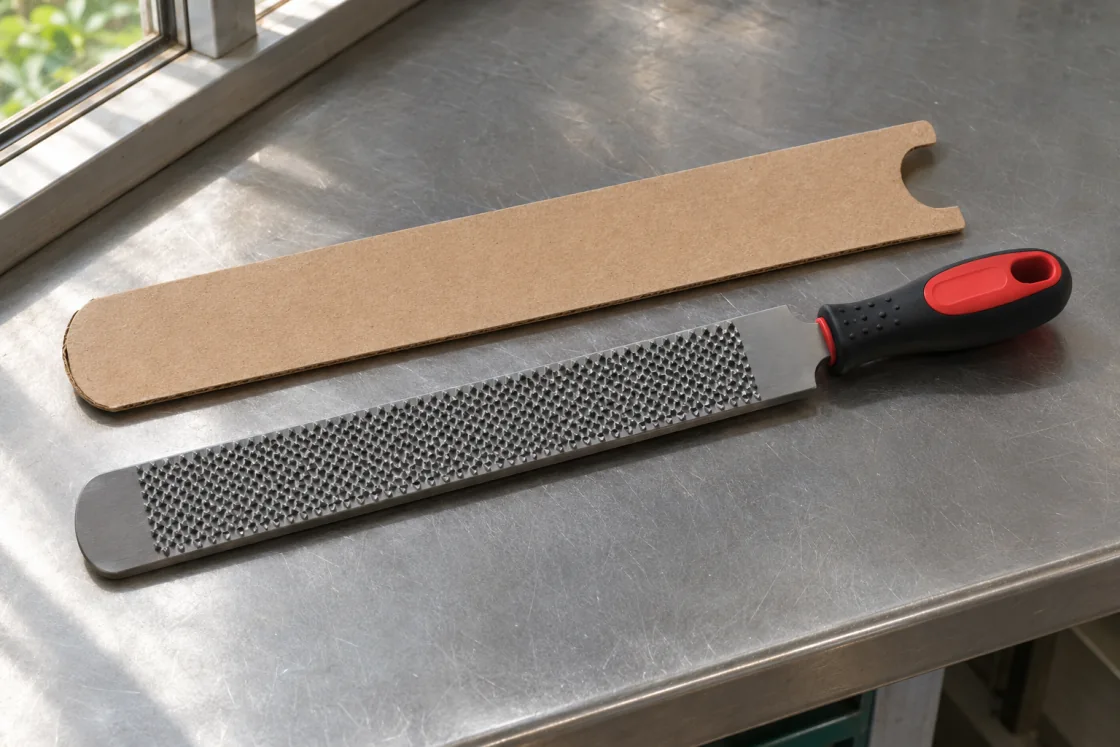
Artwork and Pack Approval
Send the model reference and layout, then agree the package dimensions and review approval details. If the unit has a scannable label, test it during your review. Save the accepted artwork and sample reference together.
- Supply the files
- Artwork, dimensions and languages
- Approve the pack
- Sample fit, marking and label location
- Record the revision
- Accepted pack build and future order reference
Quote Inputs for Each Packaging Option
Packaging cost depends on the quantities and options quoted. Separate the tool line, individual pack, any setup or sample charge, and carton handling. A unit quotation with clear terms is easier for your team to compare.
- Quantity
- Units per model and pack
- Artwork
- Marking, colour and printed surfaces
- Packaging
- Unit packing and outside carton
- Approval
- Sample or packaging proof required
Neutral Master Cartons for Local Packing
Tell us your desired batch labels, tools per carton and whether each rasp needs its own sleeve. The warehouse team should be able to identify the product and count from the outside before local retail packing.
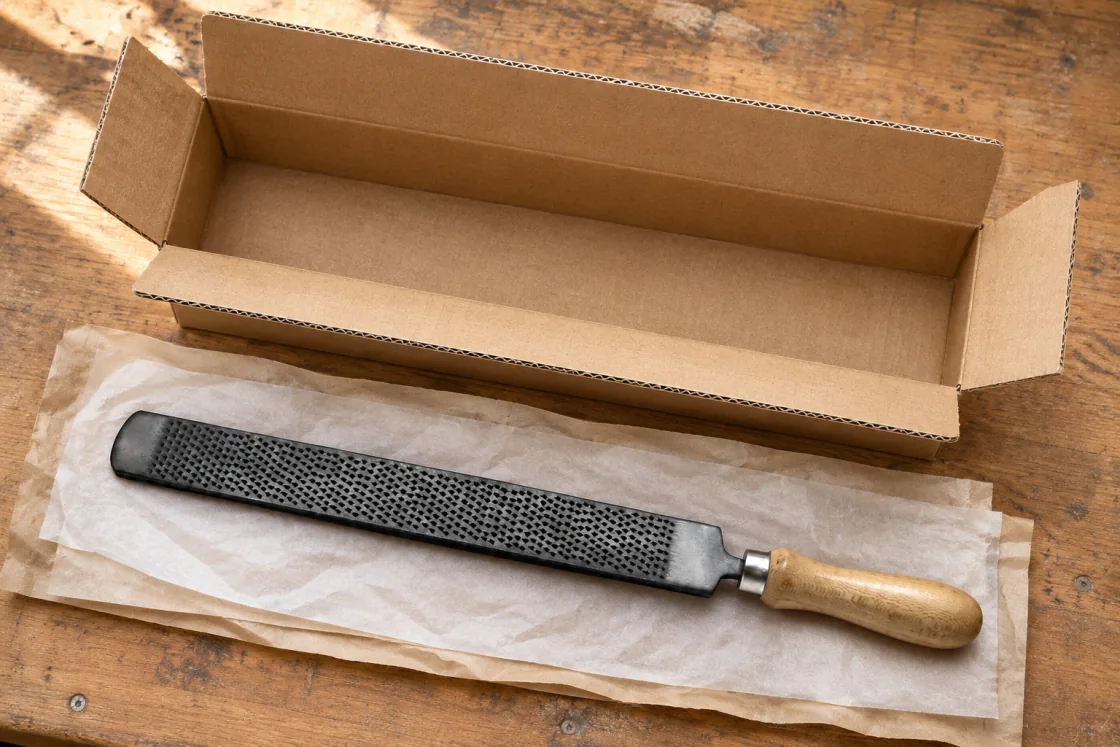
An Artwork Approval That Carries into a Reorder
Approve the exact revision of the box and the rasp together. Use the final preferred material, printing and position to check a physical sample. Separate pack setup cost, unit packaging and carton requirements when asking us to quote multiple products.
- Artwork file
- Revision, print surface and finish
- Pack sample
- Protection, actual size and label scan
- Reorder line
- Model, exact size, agreed artwork and unit count
A Quote for Your Packaging Route
Share the models, quantities, retail or bulk pack, and who will apply the label. Include a sample image of your packaging if it explains the result you need.